
IN MEMORIAM 1931 – 2002
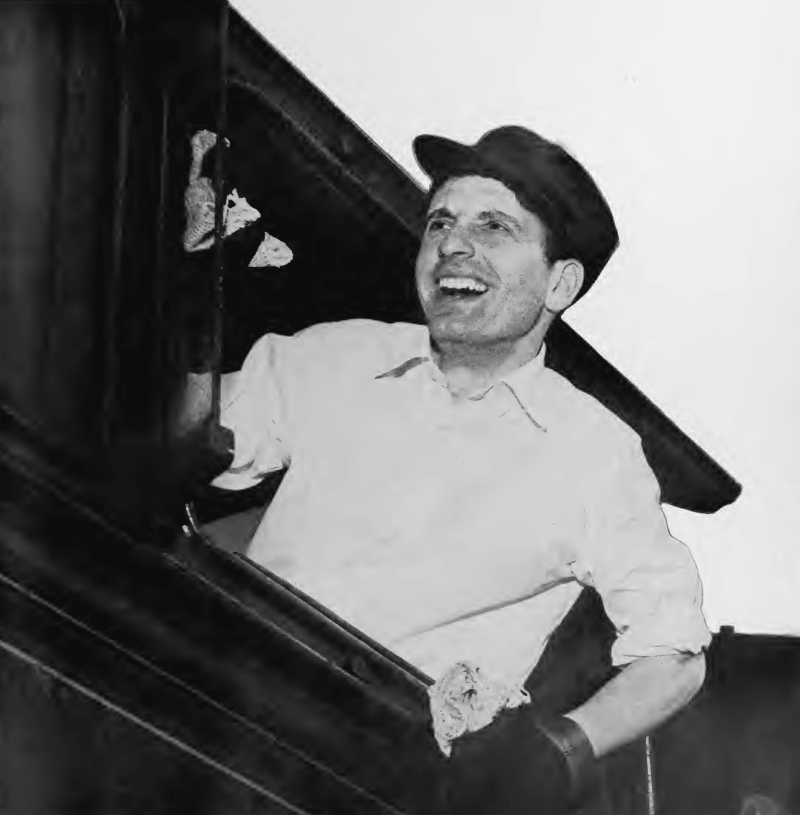
Lonnie Donegan
Banjo, Guitar, Vocals.
Blues Country Folk Skiffle
Not rated0 Fans
Anthony James "Lonnie" Donegan (29 April 1931 – 3 November 2002) was a British skiffle singer, songwriter and musician, referred to as the "King of Skiffle", who influenced 1960s British pop and rock musicians. Born in Scotland and brought up in England, Donegan began his career in the British trad jazz revival, but transitioned to skiffle in the mid-1950s, rising to prominence with a hit recording of the American folk song "Rock Island Line", which helped spur the broader UK skiffle movement.
Donegan had 31 UK top-30 hit singles, 24 were successive hits and three were number one. He was the first British male singer with two US top-10 hits. Donegan received an Ivor Novello lifetime achievement award in 1995, and in 2000, he was appointed MBE. He was a pivotal figure in the British Invasion due to his influence in the US in the late 1950s.
Donegan was born in Bridgeton, Glasgow, Scotland, on 29 April 1931. He was the son of an Irish mother (Mary Josephine Deighan) and a Scots father (Peter John Donegan), a professional violinist who had played with the Scottish National Orchestra. In 1933, when Donegan was aged two, the family moved to East Ham in Essex. Donegan was evacuated to Cheshire to escape the Blitz in the Second World War and attended St Ambrose College in Hale Barns. He lived for a while on Chiswick Mall in Middlesex.
As a child growing up in the early 1940s, Donegan listened mostly to swing jazz and vocal acts, and became interested in the guitar. Country and western and blues records, particularly by Frank Crumit and Josh White, attracted his interest, and he bought his first guitar at 14 in 1945. He learned songs such as "Frankie and Johnny", "Puttin' On the Style", and "The House of the Rising Sun" by listening to BBC radio broadcasts. By the end of the 1940s, he was playing guitar around London and visiting small jazz clubs.
Donegan first played in a major band after Chris Barber heard that he was a good banjo player, and, on a train, asked him to audition. Donegan had never played the banjo, but he bought one for the audition and succeeded more on personality than talent. His stint with Barber's trad jazz band was interrupted when he was called up for national service in 1949, but while in the army at Southampton, he was the drummer in Ken Grinyer's Wolverines Jazz Band at a local pub. A posting to Vienna brought him into contact with American troops, and access to US records and the American Forces Network radio station.
Biography summary from English Wikipedia, photograph via Wikimedia Commons.
1931
Born April 29, 1931 in United Kingdom
BIRTH
1995
Donegan received an Ivor Novello lifetime achievement award in 1995, and in 2000, he was appointed MBE.
MILESTONE
2002
Died in 2002
IN MEMORIAM
—
Rock Mr. Donegan
EP

—
It Was A Very Good Year
EP
—
The Originals
ALBUM
—
Rock My Soul
ALBUM
—
The Comancheros
EP
—
Midnight Special
EP
1956
Showcase
ALBUM
1957
Lonnie Donegan Hit Parade, Volume 2
EP
1958
Donegan on Stage
EP
1959
Relax With Lonnie
EP
1959
Lonnie Donegan
ALBUM
1960
Skiffle Folk Music
ALBUM
1960
Yankee Doodle Donegan
EP
1962
Sing Hallelujah
EP
1965
The Folk Album
ALBUM
1973
Chris Barber & Lonnie Donegan
ALBUM
1990
A Golden Hour Of
ALBUM
1999
Muleskinner Blues
ALBUM
2000
Sing Hallelujah...Plus
ALBUM
2000
Lonnie Rides Again...Plus
ALBUM
2011
The Best of Lonnie Donegan’s Early Years
ALBUM
2013
His Greatest Recordings: An Hour With “The King of Skiffle”
ALBUM
2013
The Collection 1956–1962
ALBUM
Discography via MusicBrainz.
Reviews
Average rating0Based on 0 ratings
5 ★0
4 ★0
3 ★0
2 ★0
1 ★0
Log in or sign up to rate and review.
Log In / Sign UpNo reviews yet for this artist.