Tracklist
5:01
In Bloom
Written by Kurt Cobain · Lead vocals Kurt Cobain, Dave Grohl, Krist NovoselicCome as You Are
Written by Kurt Cobain · Lead vocals Kurt Cobain, Dave Grohl, Krist NovoselicBreed
Written by Kurt Cobain, Dave Grohl, Krist Novoselic · Lead vocals Kurt Cobain, Dave Grohl, Krist NovoselicLithium
Written by Kurt Cobain · Lead vocals Kurt Cobain, Dave Grohl, Krist NovoselicPolly
Written by Chad Channing, Kurt Cobain, Krist Novoselic · Lead vocals Kurt Cobain, Dave Grohl, Krist NovoselicTerritorial Pissings
Written by Kurt Cobain, Chet Powers · Lead vocals Kurt Cobain, Dave Grohl, Krist NovoselicDrain You
Written by Kurt Cobain, Dave Grohl, Krist Novoselic · Lead vocals Kurt Cobain, Dave Grohl, Krist NovoselicLounge Act
Written by Kurt Cobain · Lead vocals Kurt Cobain, Dave Grohl, Krist NovoselicStay Away
Written by Kurt Cobain · Lead vocals Kurt Cobain, Dave Grohl, Krist NovoselicOn a Plain
Written by Kurt Cobain · Lead vocals Kurt Cobain, Dave Grohl, Krist NovoselicSomething in the Way
Written by Kurt Cobain · Lead vocals Kurt Cobain, Dave Grohl, Krist NovoselicThe Facts
- Released
- September 24, 1991
- Type
- Studio
- Genres
- alternative rock, Grunge, punk rock
- Label
- DGC Records
- Length
- 42 minutes 38 seconds
- Tracks
- 12
Credited on this album
Story
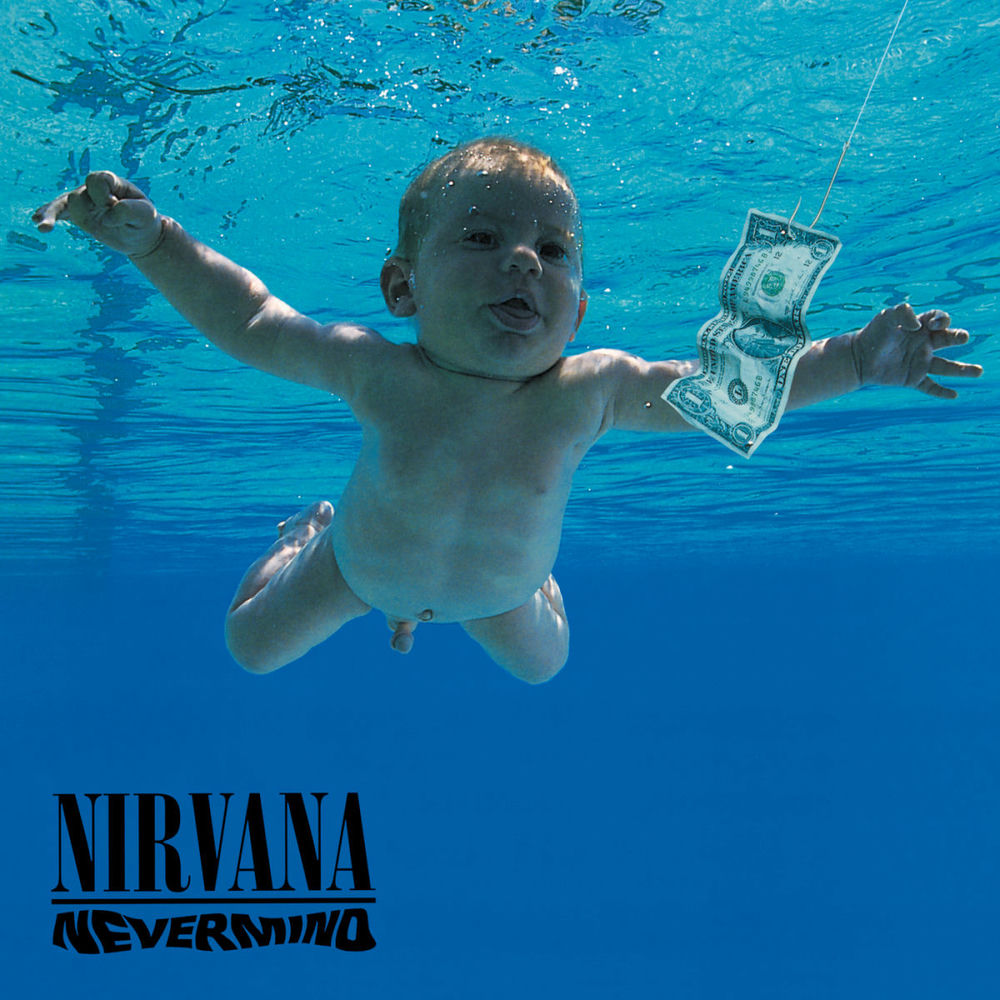
Nevermind is the second studio album by the American rock band Nirvana, released on September 24, 1991, by DGC Records. It was Nirvana's first release to feature drummer Dave Grohl. Produced by Butch Vig, Nevermind features a more polished, radio-friendly sound than the band's prior work. It was recorded at Sound City Studios in Van Nuys, California, and Smart Studios in Madison, Wisconsin, in May and June 1991, and mastered that August at the Mastering Lab in Hollywood, California.
Contrary to the hedonistic themes popular in rock music at the time, writers have observed that Nevermind promoted the image of the sensitive artist in mainstream rock. Written primarily by frontman Kurt Cobain, the album is noted for channeling a range of emotions, being noted as dark, humorous, and disturbing. Its themes include alienation, frustration, anti-establishment and anti-sexist views, and troubled love inspired by Cobain's broken relationship with Bikini Kill's Tobi Vail. A landmark in grunge and alternative rock, the album also features acoustic ballads and punk-inspired hard rock.
Nevermind was an unexpected success, replacing Michael Jackson's Dangerous at the number one spot of the US Billboard 200 in January 1992. The lead single, "Smells Like Teen Spirit", reached the Top 10 of the US Billboard Hot 100 and went on to be inducted into the Grammy Hall of Fame. Three singles "Come as You Are", "Lithium", and "In Bloom" were also successful. Nevermind was voted the best album of the year in Pazz & Jop critics' poll, while "Smells Like Teen Spirit" also topped the single-of-the-year and video-of-the-year polls. It was nominated for three Grammy Awards, including Best Alternative Music Album.
Nevermind brought Nirvana worldwide fame, with Cobain dubbed the "voice of his generation". It brought grunge and alternative rock to a mainstream audience, accelerated the decline of hair metal, and initiated a resurgence of interest in punk culture among teenagers and young adults of Generation X. It has sold more than 30 million copies worldwide, making it one of the best-selling albums. In 2024, it was certified 13 times platinum by the Recording Industry Association of America. Nevermind was added by the Library of Congress to the National Recording Registry in 2004 as "culturally, historically, or aesthetically significant", and frequently appears on lists of the greatest albums.
Background and early sessions
In early 1990, Nirvana began planning their second album for their record company Sub Pop, tentatively titled Sheep. At the suggestion of Sub Pop head Bruce Pavitt, Nirvana selected Butch Vig as producer. The band particularly liked Vig's work with Killdozer. They traveled to Vig's Smart Studios in Madison, Wisconsin, and recorded from April 2 to 6, 1990. Most of the basic arrangements were complete, but songwriter Kurt Cobain was still working on lyrics and the band was unsure of which songs to record. Ultimately, eight were recorded, some of which were later rerecorded for Nevermind: "Imodium" (later renamed "Breed"), "Dive" (later released as the B-side to "Sliver"), "In Bloom", "Pay to Play" (later renamed "Stay Away"), "Sappy", "Lithium", "Here She Comes Now" (released on Heaven & Hell: A Tribute to the Velvet Underground), and "Polly".
On April 6, Nirvana played a local show in Madison with the Seattle band Tad. Vig began to mix the recordings while the band gave an interview to Madison's community radio station WORT on April 7. Cobain strained his voice, forcing Nirvana to end the recording. On April 8, they traveled to Milwaukee to begin an extensive Midwest and East Coast tour of 24 shows in 39 days.
The drummer Chad Channing left after the tour, putting additional recording on hold. During a show by the hardcore punk band Scream, Cobain and the bassist Krist Novoselic were impressed by their drummer Dave Grohl. When Scream unexpectedly disbanded, Grohl contacted Novoselic, traveled to Seattle, and was invited to join the band. Novoselic said in retrospect that, with Grohl, everything "fell into place".
By the 1990s, Sub Pop was having financial problems. With rumors that they would become a subsidiary of a major record label, Nirvana decided to "cut out the middleman" and look for a major record label. Nirvana used the recordings as a demo tape to shop for a new label. Within a few months, the tape was circulating among major labels. A number of labels courted them; Nirvana signed with Geffen Records imprint DGC Records based on recommendations from Kim Gordon of Sonic Youth and their management company.
Recording
With a budget of $65,000, Nirvana recorded Nevermind at Sound City Studios in Van Nuys, California, in May and June 1991. To earn gas money to get to Los Angeles, they played a show at Seattle's OK Hotel on April 17, 1991 where they performed "Smells Like Teen Spirit" for the first time. The band sent Vig rehearsal tapes prior to the sessions that featured songs recorded previously at Smart Studios, plus new songs including "Smells Like Teen Spirit" and "Come as You Are".
Nirvana arrived in California and spent a few days rehearsing and working on arrangements. The only recording carried over from the Smart Studios sessions was "Polly", including Channing's cymbal crashes. Once recording commenced, the band worked eight to ten hours a day.
Despite receiving a $287,000 advance upon signing with Geffen, Cobain retained a preference for inexpensive equipment—particularly Japanese-made Fender guitars, due to their skinny necks and wider availability in lefthanded orientation. These included several Stratocasters fitted with humbucker pickups in the bridge positions, as well as a 1965 Jaguar with DiMarzio pickups and a 1969 Mustang, the latter of which Cobain cited as his favorite due to its design flaws. For the album, Cobain bought a rackmount system featuring a Mesa/Boogie Studio preamp, a Crown power amp, and Marshall cabinets. He also used a Vox AC30 and a Fender Bassman. Vig preferred not to use pedals, but he allowed Cobain to use a Boss DS-1 distortion pedal, which Cobain considered a key part of his sound, as well as an Electro-Harmonix Big Muff fuzz pedal and a Small Clone chorus.
Novoselic and Grohl finished their tracks in days, while Cobain worked longer on guitar overdubs, vocals, and lyrics. He sometimes finished lyrics minutes before recording. Vig recalled that Cobain was often reluctant to record overdubs, but he was persuaded to double-track his vocals when Vig told him that John Lennon did it. Though the sessions generally went well, Vig said Cobain would become difficult at times: "He'd be great for an hour, and then he'd sit in a corner and say nothing for an hour."
Reviews
Average rating0Based on 0 ratings
5 ★0
4 ★0
3 ★0
2 ★0
1 ★0
Log in or sign up to rate and review.
Log In / Sign UpNo reviews yet for this album.
Community
Nobody has started a discussion about Nevermind yet.