
Tracklist
Disc 1
3:52
It’s a Boy
Written by Pete Townshend · Lead vocals Pete Townshend1921
Written by Pete Townshend · Lead vocals Pete Townshend, Roger DaltreyAmazing Journey
Written by Pete TownshendSparks
Written by Pete TownshendEyesight to the Blind (The Hawker)
Written by Sonny Boy Williamson · Lead vocals Roger DaltreyChristmas
Written by Pete Townshend · Lead vocals Roger Daltrey, Pete TownshendCousin Kevin
Written by John Entwistle · Lead vocals John Entwistle, Pete TownshendThe Acid Queen
Written by Pete Townshend · Lead vocals Pete TownshendUnderture
Written by Pete TownshendDisc 2
Do You Think It’s Alright?
Written by Pete Townshend · Lead vocals Roger Daltrey, Pete TownshendFiddle About
Written by John Entwistle · Lead vocals John EntwistlePinball Wizard
Written by Pete Townshend · Lead vocals Roger Daltrey, Pete TownshendThere’s a Doctor
Written by Pete Townshend · Lead vocals Roger Daltrey, John Entwistle, Pete TownshendGo to the Mirror
Written by Pete Townshend · Lead vocals Roger Daltrey, Pete TownshendTommy Can You Hear Me?
Written by Pete Townshend · Lead vocals Roger Daltrey, John Entwistle, Pete TownshendSmash the Mirror
Written by Pete Townshend · Lead vocals Roger DaltreySensation
Written by Pete Townshend · Lead vocals Pete TownshendMiracle Cure
Written by Pete Townshend · Lead vocals Roger Daltrey, John Entwistle, Pete TownshendSally Simpson
Written by Pete Townshend · Lead vocals Roger DaltreyI’m Free
Written by Pete Townshend · Lead vocals Roger DaltreyWelcome
Written by Pete Townshend · Lead vocals Roger Daltrey, Pete Townshend, John EntwistleTommy’s Holiday Camp
Written by Keith Moon · Lead vocals Pete TownshendWe’re Not Gonna Take It
Written by Pete Townshend · Lead vocals Roger Daltrey, John Entwistle, Pete TownshendThe Facts
- Released
- May 31, 1969
- Type
- Studio
- Genres
- Rock, hard rock, Art Rock, Jazz, power pop
- Label
- Decca Records
- Producers
- Chris Stamp
- Recorded
- 19 September 1968 – 7 March 1969
- Length
- 1 hour 14 minutes
- Tracks
- 24
Credited on this album
Story
Tommy is the fourth studio album by the English rock band the Who, released on 19 May 1969. Written primarily by guitarist Pete Townshend, Tommy is a double album and an early rock opera that tells the story of the fictional Tommy Walker and his path to becoming a spiritual leader and messianic figure.
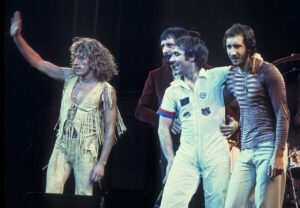
Townshend came up with the concept of Tommy after being introduced to the work of Indian spiritual teacher Meher Baba, and he attempted to translate Baba's ideas into music. Recording of the album began in September 1968, but took six months to complete as material needed to be arranged and re-recorded in the studio. The Who promoted the album's release with an extensive tour, including a live version of Tommy, which lasted throughout 1969 and 1970. Key gigs from the tour included appearances at Woodstock, the 1969 Isle of Wight Festival, the University of Leeds, the Metropolitan Opera House, and the 1970 Isle of Wight Festival. The live performances of Tommy drew critical praise and revitalised the band's career.
Upon its release, Tommy was acclaimed by critics, who hailed it as the Who's breakthrough. Several writers view it as an important and influential album in the history of rock music. In 1998, Tommy was inducted into the Grammy Hall of Fame.
Subsequently, the rock opera was developed into other media, including a ballet in Montreal in 1970, a Seattle Opera production in 1971, an orchestral version by Lou Reizner in 1972, a film directed by Ken Russell and featuring Jack Nicholson and Oliver Reed in 1975, and a Broadway musical in 1992.
Tommy has been reissued several times on CD, including a remix by Jon Astley in 1996, a deluxe Super Audio CD in 2003, and a super deluxe box set in 2013, including previously unreleased demos and live material.
Background
Townshend had been looking at ways of progressing beyond the standard three-minute pop single format since 1966. Co-manager Kit Lambert shared Townshend's views and encouraged him to develop musical ideas, conceiving the term "rock opera". The first use of the term was applied to a suite called Quads, set in a future where parents could choose the sex of their children. A couple want four girls but instead receive three girls and a boy, raising him as a girl anyway. The opera was abandoned after writing a single song, the hit single, "I'm a Boy". When the Who's second album, A Quick One, ran short of material during recording, Lambert suggested that Townshend should write a "mini-opera" to fill the gap. Townshend initially objected, but eventually agreed to do so, coming up with "A Quick One, While He's Away", which joined short pieces of music together into a continuous narrative. During 1967, Townshend learned how to play the piano and began writing songs on it, taking his work more seriously. That year's The Who Sell Out included a mini-opera in the last track, "Rael", which like "A Quick One ..." was a suite of musical segments joined together.
By 1968, Townshend was unsure about how the Who should progress musically. The group were no longer teenagers, but he wanted their music to remain relevant. His friend, International Times art director Mike McInnerney, told him about the Indian spiritual mentor Meher Baba, and Townshend became fascinated with Baba's values of compassion, love and introspection. The Who's commercial success was on the wane after the single "Dogs" failed to make the top 20, and there was a genuine risk of the band breaking up. The group still performed well live and spent most of the spring and summer touring the US and Canada, but their stage act relied on Townshend smashing his guitar or Keith Moon demolishing his drums, which kept the group in debt. Townshend and Kit Lambert realised they needed a larger vehicle for their music than hit singles and a new stage show, and Townshend hoped to incorporate his love of Meher Baba into this concept. He decided that the Who should record a series of songs that stood well in isolation but formed a cohesive whole on the album. He also wanted the material performed in concert, to counter the trend of bands like the Beatles and the Beach Boys producing studio output that was not designed for live performance.
In August 1968, in an interview to Rolling Stone, Townshend talked about a new rock opera and described the entire plot in great detail, which ran to 11 pages. The Who biographer Dave Marsh subsequently said the interview described the narrative better than the finished album. Townshend later regretted publishing so much detail, as he felt it forced him to write the album according to that blueprint. The rest of the Who, however, were enthusiastic about the idea, and let him have artistic control over the project.
Recording
The Who started recording the album at IBC Studios on 19 September 1968. There was no firm title at this point, which was variously referred to as Deaf, Dumb and Blind Boy, Amazing Journey, Journey into Space, The Brain Opera and Omnibus. Townshend eventually settled on Tommy because it was a common British name and a nickname for soldiers in the First World War. Kit Lambert took charge of the production, with Damon Lyon-Shaw as engineer. Sessions were block-booked from 2 pm – 10 pm, but recording often spilled over into the early morning.
The album was recorded using an eight-track system, which allowed various instruments to be overdubbed. Townshend used several guitars in the studio but made particular use of the Gibson J-200 acoustic and the Gibson SG. As well as their usual instruments, Townshend played piano and organ and bassist John Entwistle doubled on french horn. Keith Moon used a new double bass drum kit owned by roadie Tony Haslam, after Premier had refused to loan him any more equipment due to the items repeatedly being abused. Though Townshend wrote the majority of the material, the arrangements came from the entire band. Singer Roger Daltrey later said that Townshend often came in with a half-finished demo recording, adding "we probably did as much talking as we did recording, sorting out arrangements and things." Townshend asked Entwistle to write two songs ("Cousin Kevin" and "Fiddle About") that covered the darker themes of bullying and abuse. "Tommy's Holiday Camp" was Keith Moon's suggestion of what kind of religious movement Tommy could lead. Moon got the songwriting credit for suggesting the idea, though the music was composed and played by Townshend. A significant amount of material had a lighter style than earlier recordings, with greater prominence put on the vocals. Moon later said, "It was, at the time, very un-Wholike. A lot of the songs were soft. We never played like that."
Some of the material had already been written for other projects. "Sensation" was written about a girl Townshend had met on the Who's tour of Australia in early 1968, "Welcome" and "I'm Free" were about peace found through Meher Baba and "Sally Simpson" was based on a gig with the Doors which was marred by violence. Other songs had been previously recorded by the Who and were recycled; "It's A Boy" was derived from "Glow Girl", an out-take from The Who Sell Out, while "Sparks" and "Underture" re-used and expanded one of the instrumental themes in "Rael". "Amazing Journey" was, according to Townshend, "the absolute beginning" of the opera and summarised the entire plot. "The Hawker" was a cover of Sonny Boy Williamson's "Eyesight to the Blind". A cover of Mercy Dee Walton's "One Room Country Shack" was also recorded but was scrapped from the final track listing as Townshend could not figure out a way to incorporate it in the plot.
Recording at IBC was slow, due to a lack of a full plot and a full selection of songs. The group hoped that the album would be ready by Christmas 1968, but sessions dragged on. Melody Maker's Chris Welch visited IBC studios in November and while he was impressed with the working environment and the material, the project still did not have a title and there was no coherent plotline. The Who's US record company, Decca Records, got so impatient waiting for new product that they released the compilation album Magic Bus: The Who on Tour which received a scathing review from Greil Marcus in Rolling Stone over its poor selection of material and misleading name (as the album contained studio recordings and was not live).
The Who took a break from recording at the end of 1968 to tour, including a well received appearance at The Rolling Stones Rock and Roll Circus on 10 December. They resumed sessions at IBC in January 1969, block booking Monday to Thursday, but had to do gigs every weekend to stop going further into debt. A major tour was booked for the end of April, and the group's management insisted that the album would have to be finished by then, as it had been well over a year since The Who Sell Out. Kit Lambert wrote a script, Tommy (1914–1984), which he professionally printed and gave copies to the band, helping them focus on the storyline and also deciding to make the album a double. The group were still coming up with new material; Lambert insisted that the piece should have a proper overture, while Townshend wrote "Pinball Wizard" so that Nik Cohn, a pinball fan, would give the album a favourable review in The New York Times. Lambert wanted an orchestra to appear on the album, but Townshend was strongly against the idea, and time and budget constraints meant it could not happen anyway.
By March 1969, some songs had been recorded several times, yet Townshend still thought there were missing pieces. Entwistle had become fed up with recording, later saying "we had to keep going back and rejuvenating the numbers ... it just started to drive us mad." The final recording session took place on 7 March, the same day that "Pinball Wizard" was released as a single. The group started tour rehearsals and promotional activities for the single and Lambert went on holiday in Cairo. The mixing was left to Damon Lyon-Shaw and assistant engineer Ted Sharp, who did not think IBC was well suited for the task. The album overshot its April deadline, as stereo mastering continued into the end of the month.
Release and reception
After delays surrounding the cover artwork, Tommy was released on 19 May 1969 in the US by Decca and 23 May in the UK by Track Records. The original double album was configured with sides 1 and 4 on one disc, and sides 2 and 3 on the other, to accommodate record changers.
The album was commercially successful, reaching No. 2 in the UK album charts. It peaked at No. 7 in the US in 1969, but in 1970 it re-entered the charts, at which time it went on to peak at No. 4. It sold 200,000 copies in the first two weeks in the US alone and was awarded a gold record for sales of 500,000 on 18 August. "Pinball Wizard", "I'm Free" and "See Me, Feel Me" were released as singles and received airplay on the radio. "Pinball Wizard" reached the top 20 in the US and the top five in the UK. "See Me, Feel Me" reached the top 20 in the US and "I'm Free" reached the top 40. An EP of selections from the album was planned to be released in the UK in November 1970 but was withdrawn.
When it was released, critics were split between those who thought the album was a masterpiece, the beginnings of a new genre, and those that felt it was exploitative. The album had a hostile reception with the BBC and certain US radio stations, with Tony Blackburn describing "Pinball Wizard" as "distasteful". Nevertheless, BBC Radio 1 received an advance copy of the album at the start of May and gave the material its first airplay on Pete Drummond's show on 3 May. Townshend promoted the album's release with interviews in which he attempted to explain the plotline. Unfortunately, because it fundamentally dealt with the abstract concept of Meher Baba's spiritual precepts, the interviews often gave confusing and contradictory details.
Reviews
Average rating0Based on 0 ratings
5 ★0
4 ★0
3 ★0
2 ★0
1 ★0
Log in or sign up to rate and review.
Log In / Sign UpNo reviews yet for this album.
Community
Nobody has started a discussion about Tommy yet.