

Tracklist
4:35
Red Barchetta
Written by Geddy Lee, Alex Lifeson, Neil Peart · Lead vocals Geddy LeeYYZ
Written by Geddy Lee, Neil PeartLimelight
Written by Geddy Lee, Alex Lifeson, Neil Peart · Lead vocals Geddy LeeThe Camera Eye
Written by Geddy Lee, Alex Lifeson, Neil Peart · Lead vocals Geddy LeeWitch Hunt
Written by Geddy Lee, Alex Lifeson, Neil Peart · Lead vocals Geddy LeeVital Signs
Written by Geddy Lee, Alex Lifeson, Neil Peart · Lead vocals Geddy LeeThe Facts
- Released
- 1981
- Type
- Studio
- Genres
- hard rock, heavy metal, Progressive rock
- Label
- PolyGram
- Length
- 40 minutes 1 second
- Tracks
- 7
Credited on this album

Story
Moving Pictures is the eighth studio album by Canadian rock band Rush, released on February 12, 1981, by Anthem Records. After touring to support their previous album, Permanent Waves (1980), the band started to write and record new material in August 1980 with longtime co-producer Terry Brown. They continued to write songs with a more radio-friendly sound, featuring tighter and shorter song structures compared to their earlier albums.
"Limelight", "Tom Sawyer" and "Vital Signs" were released as singles across 1981, and the instrumental "YYZ" was nominated for a Grammy Award for Best Rock Instrumental Performance. Rush supported the album on tour from February to July 1981. In 2020, Rolling Stone ranked the album number 379 on its list of the "500 Greatest Albums of All Time".
Moving Pictures received a positive reception from contemporary and retrospective music critics and became an instant commercial success. The album reached number one in Canada and number three in both the United States and the United Kingdom. Moving Pictures is the fastest-selling album in the band's catalogue. It was certified Platinum by the RIAA on April 27, 1981 for one million copies sold, just two months after the album's release. It has since been certified Platinum five times over, for five million copies sold in the United States.
Background and recording
In June 1980, the band ended their 10-month tour of the United States, Canada and the United Kingdom in support of their previous album, Permanent Waves (1980). The tour was a commercial success for the group, becoming the first of their career to earn them a profit. During their stop in New York City a month prior, the band decided to scrap plans for a second live album in favor of making a new one in the studio. Cliff Burnstein of Mercury Records suggested the idea to the band, and Neil Peart was particularly enthusiastic about the new ideas that were being developed at sound checks and was keen to put them to tape. Geddy Lee and Alex Lifeson caught on to his enthusiasm. The trio pitched the idea to their manager and producer, who had already mapped out a two-year plan for them, but agreed to the change and cancelled the schedule. Lifeson looked back on this change of plan as the most important one in the band's history since the decision to record 2112 (1976), which became their breakthrough hit. Prior to starting on the album, Rush joined fellow Canadian rock band Max Webster to play on "Battle Scar", a track for their album Universal Juveniles (1980). During the sessions their lyricist Pye Dubois suggested a song that he thought was suitable for Rush; this was developed into "Tom Sawyer", the opening track on Moving Pictures.
The band retreated to Stony Lake, Ontario to write and develop new material. The sessions were productive. "The Camera Eye" was the first song to be worked on, followed by "Tom Sawyer", "Red Barchetta", the instrumental "YYZ", and "Limelight". Lee noticed a change in Peart's lyrics during this time, which had started with Permanent Waves, towards more concise and direct words. Following these sessions, Rush returned to Phase One Studios in late August 1980 with their longtime co-producer Terry Brown and prepared demos of these songs. The tracks were refined further during subsequent rehearsals for a series of warm-up shows across the US in September and October 1980, during which "Tom Sawyer" and "Limelight" were performed live for the first time.
Moving Pictures was recorded at Le Studio in Morin-Heights, Quebec in October and November 1980. Rush and Brown worked with 48-track recording for the first time. They'd record the basic tracks—drums and bass—to one 24-track tape reel, and transfer a stereo mix of these to a second 24-track reel for overdubs. This allowed them to preserve the quality of their recordings as much as possible as they were able to place the original backing track reel in storage until the mixing stage, thereby reducing potential damage to the tape from frequent playback. They experimented with a pressure zone microphone, a type of boundary microphone that picks up direct sound and no reverberated signals, that was taped onto Peart's chest as he played the drums. The audio captured from it was used to pick up the ambience in the studio room and was inserted into the final mix. Peart is seen wearing the microphone in the music video for "Vital Signs". The album was mixed down onto a Sony digital mastering machine, being an early example of digital recording. However, the completion of the album was delayed by two weeks due to technical issues in the studio, including with the Sony unit, but, as Brown elaborated, "it’s to be expected when you’re pushing the latest gear to its limits".
Artwork
The cover was designed by Hugh Syme who estimated the artwork cost $9,500 to produce. Anthem Records refused to cover the entire bill, leaving the band to pay for the rest. It is a triple entendre; the front depicts movers who are carrying pictures. On the side, people are shown crying because the pictures passing by are emotionally "moving". Finally, the back cover has a film crew making a motion (moving) picture of the whole scene. It was photographed outside the Ontario Legislative Building at Queen's Park, Toronto. The pictures that are being moved are the band's Starman logo featured on the reverse cover of 2112 (1976), one of the Dogs Playing Poker paintings entitled A Friend in Need, and a painting that shows Joan of Arc being burned at the stake. The film crew on the back cover actually shot the scene, from which a single frame was used for the cover. This was revealed to Rush concertgoers several years later when the still image was shown on the stage projector, which suddenly came to life as a film sequence.
Mike Dixon, one of the movers on the cover of Moving Pictures and the band's next album, Exit...Stage Left (1981), discussed the various people on the Moving Pictures cover. The first, Bobby King, seen furthest to the left, was a member of Syme's design team and is credited for assisting Syme on A Farewell to Kings, Hemispheres, and Archives. Dixon explained that King is not only one of the movers, but also the Starman logo and the man in the hat on the Hemispheres cover. The mover holding the Starman painting is Kelly Jay, singer of the Toronto band Crowbar who performed a show with Rush in 1973. Photographer Deborah Samuel is the Joan of Arc character, and her relatives are the family on the right. However, this conflicts with information provided in the Rush biography Chemistry, which states: "Hugh borrowed friends, neighbours and even his hairdresser's parents".
Release
Moving Pictures was played in its entirety during Lee's visit to Rick Ringer's radio show on CHUM-FM in Toronto, on February 11, 1981. The album was released on the following day.
Reviews
Average rating0Based on 0 ratings
5 ★0
4 ★0
3 ★0
2 ★0
1 ★0
Log in or sign up to rate and review.
Log In / Sign UpNo reviews yet for this album.
Community
Nobody has started a discussion about Moving Pictures yet.
Articles
 Why Geddy Lee Didn’t Smile For A Year And A Half Before Rush Returned
August 26, 2026
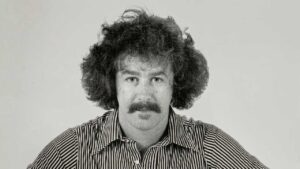 Pye Dubois, Legendary Rush and Max Webster Lyricist, Dead at 77
September 25, 2026
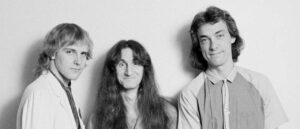 Why Rush’s Moving Pictures Remains a Masterpiece
August 25, 2026
 Beth Hart Reveals How Rush’s Moving Pictures Shaped Her Prog Rock Influences
July 20, 2026