Tracklist
3:52
Even Flow
Written by Stone Gossard, Eddie Vedder · Lead vocals Eddie VedderAlive
Written by Stone Gossard, Eddie Vedder · Lead vocals Eddie VedderWhy Go
Written by Jeff Ament, Eddie Vedder · Lead vocals Eddie VedderBlack
Written by Stone Gossard, Eddie Vedder · Lead vocals Eddie VedderJeremy
Written by Jeff Ament, Eddie Vedder · Lead vocals Eddie VedderOceans
Written by Jeff Ament, Stone Gossard, Eddie Vedder · Lead vocals Eddie VedderPorch
Written by Eddie Vedder · Lead vocals Eddie VedderGarden
Written by Jeff Ament, Stone Gossard, Eddie Vedder · Lead vocals Eddie VedderDeep
Written by Jeff Ament, Stone Gossard, Eddie Vedder · Lead vocals Eddie VedderRelease
Written by Jeff Ament, Stone Gossard, Dave Krusen, Mike McCready, Eddie VedderMaster/Slave
Written by Jeff Ament, Rick Parashar, Eddie VedderThe Facts
- Released
- August 27, 1991
- Type
- Studio
- Genres
- Grunge, alternative rock, hard rock, Folk Rock
- Label
- Epic
- Producers
- Rick Parashar, Pearl Jam
- Recorded
- March and April 1991
- Length
- 53 minutes 6 seconds
- Tracks
- 12
Credited on this album
Story
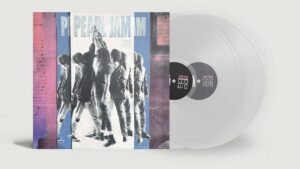
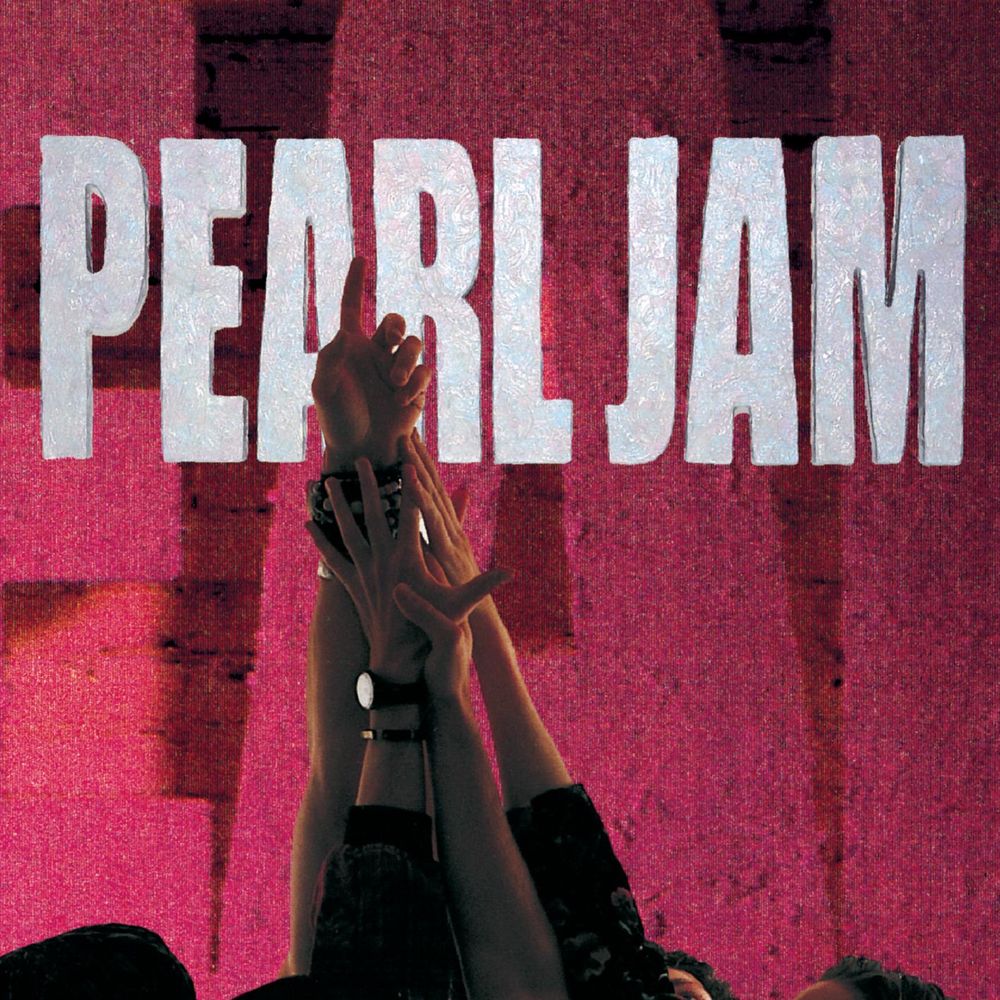
Ten is the debut studio album by American rock band Pearl Jam, released on August 27, 1991, through Epic Records. Following the dissolution of their previous band Mother Love Bone in 1990, bassist Jeff Ament and guitarist Stone Gossard began rehearsing with new guitarist Mike McCready. The group recorded a five-song instrumental demo tape featuring Matt Cameron on drums. Copies of the demo were eventually given to drummer Dave Krusen and vocalist Eddie Vedder, both of whom were invited to audition for the band in Seattle. Many of the songs on Ten began as instrumental jams or Mother Love Bone songs for which Vedder composed new melodies and lyrics.
Despite its reputation as a quintessential grunge album, Ten is often noted for displaying a stronger classic rock influence than other contemporary grunge releases, drawing comparisons to the work of Jimi Hendrix and Led Zeppelin. The album is also characterised as having an anthemic, rich sound. Ten was not an immediate commercial success, but by late 1992, it had reached number two on the Billboard 200. The album produced three hit singles: "Alive", "Even Flow", and "Jeremy".
"Jeremy" became one of Pearl Jam's best-known songs, and received nominations for Best Rock Song and Best Hard Rock Performance at the 35th Grammy Awards. MTV put the video for "Jeremy" into heavy rotation; it received four awards at the 1993 MTV Video Music Awards, including Video of the Year and Best Group Video. In 2021, the album was inducted into the Grammy Hall of Fame.
Beyond its role in consolidating the mainstream success of grunge rock in the early 1990s, Ten is generally considered to have been instrumental in the rise and dominance of alternative rock throughout the decade. The album has since been ranked by several publications as one of the greatest albums of all time. By February 2013, it had sold 10 million copies in the US, becoming the 22nd record to do so in the Nielsen SoundScan era, and has been certified 13× Platinum by the Recording Industry Association of America (RIAA). Ten remains Pearl Jam's most commercially successful album.
Background
Guitarist Stone Gossard and bassist Jeff Ament had played together in the pioneering grunge band Green River. Following Green River's dissolution in 1987, Ament and Gossard played together in Mother Love Bone during the late 1980s. Mother Love Bone's career was cut short when vocalist Andrew Wood died of a drug overdose in 1990, shortly before the release of the group's debut album, Apple. Devastated, it took months before Gossard and Ament agreed to play together again. Gossard spent his time afterwards writing material that was harder-edged than what he had been doing previously. After a few months, Gossard started practicing with fellow Seattle guitarist Mike McCready, whose band Shadow had broken up; McCready in turn encouraged Gossard to reconnect with Ament. The three then went into the studio for separate sessions with Soundgarden drummer Matt Cameron and former Shadow drummer Chris Friel to record some instrumental demos. Five of the songs recorded—"Dollar Short", "Agytian Crave", "Footsteps", "Richard's E", and "E Ballad"—were compiled onto a tape called Stone Gossard Demos '91 that was circulated in the hopes of finding a singer and drummer for the trio.
San Diego musician Eddie Vedder acquired a copy of the demo in September 1990, when it was given to him by former Red Hot Chili Peppers drummer Jack Irons. Vedder listened to the demo, went surfing, and wrote lyrics the next day for "Dollar Short", "Agytian Crave", and "Footsteps". "Dollar Short" and "Agytian Crave" were later retitled "Alive" and "Once", respectively. Gossard and Ament heard the demo with Vedder's vocals and lyrics, and were impressed enough to fly Vedder out to Seattle for an audition. Meanwhile, Vedder had written lyrics for "E Ballad", retitled "Black". Vedder arrived on October 13 and rehearsed with the band (now joined by drummer Dave Krusen) for a week, writing eleven songs in the process. Vedder was soon hired as the band's singer, and the group signed to Epic Records shortly thereafter.
Recording
The band, then named Mookie Blaylock (after the basketball player of that name), entered London Bridge Studios in Seattle, Washington in March 1991 with producer Rick Parashar to record its debut album. After working with Parashar on Temple of the Dog, Stone and Ament asked him to co-produce and engineer Ten. Parashar also contributed piano, organ, percussion, co-wrote vocal harmonies and co-wrote the intro/outro of the album. A few tracks were previously recorded at London Bridge in January, but only "Alive" was carried over from that session. The album sessions were quick and lasted only a month, mainly due to the band having already written most of the material for the record. "Porch", "Deep", "Why Go", and "Garden" were first recorded during the album sessions; everything else had been previously recorded during demo sessions at some point. McCready said that "Ten was mostly Stone and Jeff; me and Eddie were along for the ride at that time." Ament stated, "We knew we were still a long way from being a real band at that point."
The recording sessions for Ten were completed in May 1991. Krusen left the band once the sessions were completed, checking himself into rehab. According to Krusen, he was suffering from personal problems at the time. Krusen said, "It was a great experience. I felt from the beginning of that band that it was something special," and added, "They had to let me go. I couldn't stop drinking, and it was causing problems. They gave me many chances, but I couldn't get it together." In June, the band joined Tim Palmer in England for mixing. Palmer decided to mix the album at Ridge Farm Studio in Dorking, a converted farm that according to Palmer was "about as far away from an L.A. or New York studio as you can get." Palmer made a few additions to the already-recorded songs, including having McCready finish up the guitar solo on "Alive" and tweaking the intro to "Black. Palmer overdubbed a pepper shaker and a fire extinguisher as percussion on "Oceans".
In subsequent years, band members have expressed dissatisfaction with the way the album's mixing turned out. In 2001, Ament said, "I'd love to remix Ten. Ed, for sure, would agree with me. It wouldn't be like changing performances; just pull some of the reverb off it." In 2002, Gossard said, "It was 'over-rocked', we were novices in the studio and spent too long recording, doing different takes, and killing the vibe and overdubbing tons of guitar. There's a lot of reverb on the record." In 2006, Vedder said, "I can listen to the early records [except] the first record...it's just the sound of the record. It was kind of mixed in a way that was...it was kind of produced."
More recently Jeff Ament was quoted in The Seattle Times with a new perspective on the mixing “I probably hadn’t listened to that record in 25 years, unless there’s a song we haven’t played very much and we’re trying to go back. A song like ‘Deep’ or something. But it was cool. I listened to (mixer) Tim Palmer’s original mix of it and I really enjoyed what Tim did for that record. I think for a long time, I wanted us to be a more straight-ahead rock band. I felt like all of us wanted a more straight-ahead, drier sound. It reminded me of the reason that we decided to work with him in the first place.”
According to Guitar World, Mike McCready's undisguised Stevie Ray Vaughan passion saw him bring Strats back into vogue. The guitarist described his playing on "Black" and "Even Flow" as an SRV “rip off”. Both guitarists used Marshall JCM800s for dirty tones and Fenders for clean parts.
Music and lyrics
Ten has been described as a grunge, alternative rock, and hard rock album. Several of the songs on the album started as instrumental compositions that Vedder added lyrics to after he joined the band. Regarding the lyrics, Vedder said, "All I really believe in is this fucking moment, like right now. And that, actually, is what the whole album talks about." Vedder's lyrics for Ten deal with subjects like depression, suicide, loneliness, and murder. The album also tackles social concerns such as homelessness ("Even Flow") and the use of psychiatric hospitals ("Why Go"). The song "Jeremy" and its accompanying video were inspired by a true story in which a high school student shot himself in front of his classmates.
Many listeners interpreted "Alive" as an inspirational anthem due to its decidedly uplifting instrumentals and chorus. Vedder has since revealed that the song tells the semi-autobiographical tale of a son discovering that his father is actually his stepfather (his real father having died long ago), while his mother's grief turns her to sexually embrace her son, who strongly resembles the biological father. "Alive" and "Once" formed part of a song cycle in what Vedder later described as a "mini-opera" entitled Momma-Son (the third song, "Footsteps", appeared as a B-side on the "Jeremy" single). Vedder explained that the lyrics told the story of a young man whose father dies ("Alive"), causing him to go on a killing spree ("Once") which leads to his capture and execution ("Footsteps"). It was later revealed that Vedder's lyrics were inspired by his long-held hurt in discovering at age 17 that the man he thought was his father was not, and that his real father had already died.
While Ten deals with dark subject matter, it has generally been seen as a high-water mark of the early 1990s alternative rock sound, with Vedder's unusually deep and strong (and later much-imitated) voice alternating between solidity and vibrato against the unrestrained, guitar-heavy, hard rock sound that drew influence from Led Zeppelin and other rock bands of the 1970s. Ten's musical style, influenced by classic rock, combined an "expansive harmonic vocabulary" with an anthemic sound. Stephen Thomas Erlewine of AllMusic stated that the songs on the album fused "the riff-heavy stadium rock of the 1970s with the grit and anger of '80s post-punk, without ever neglecting hooks and choruses."
Ten features a two-part track entitled "Master/Slave" that both opens and closes the album. The first part begins the album, before "Once" starts, and the second part closes the album, after "Release". It begins about ten seconds after the album's closer "Release" as a hidden track, but both count as one track on the CD. The song is entirely instrumental (except for random unintelligible words Vedder utters throughout) with a dominant fretless bass line making up the core of the song (which Ament referred to in a 1994 Bass Player magazine interview as "my tribute to (fretless bass instrumentalist) Mick Karn"), along with some guitar and sounds that seem to come from the drums. Producer Rick Parashar stated in 2002, "As I recall, I think Jeff had, like, a bass line...I heard the bass line and then we kind of were collaborating on that in the control room, and then I just started programming on the keyboard all this stuff; he was jamming with it and it just kind of came about like that." In a 2021 interview with Kyle Meredith, Ament also revealed that he took inspiration from Cheap Trick's bass sounds for songs "Why Go" and "Jeremy".
Reviews
Average rating0Based on 0 ratings
5 ★0
4 ★0
3 ★0
2 ★0
1 ★0
Log in or sign up to rate and review.
Log In / Sign UpNo reviews yet for this album.
Community
Nobody has started a discussion about Ten yet.