
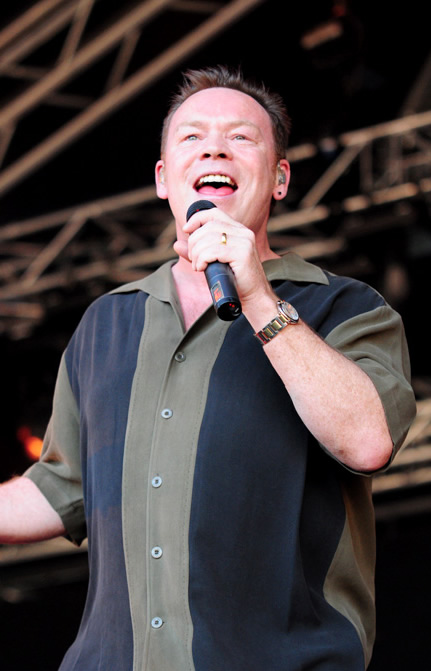
Alistair Ian Campbell (born 15 February 1959) is an English singer and songwriter who was lead singer and co-founder of the British reggae band UB40.
UB40 sold more than 70 million records worldwide and toured for 30 years with the original line-up of the band. In 2008 Campbell and keyboard-player Mickey Virtue left UB40 due to a dispute with band management and teamed up in a new band. In August 2014, Campbell announced he had reunited with former UB40 bandmate Astro, who also left due to management disputes and the musical direction of the band. Campbell then formed a new UB40 featuring the three bandmates.
Alistair Ian Campbell was born in Birmingham, England, the son of the Scottish folk singer Ian Campbell. He is the brother of UB40 guitarist Robin Campbell, and Duncan Campbell, who took over from Ali as UB40 frontman from 2008 until 2021.
In mid-1978, Campbell began rehearsing reggae covers with bassist Earl Falconer and drummer James Brown. With the addition of more people including percussionist Norman Hassan, saxophonist Brian Travers, and Campbell's brother Robin on guitar, the group became UB40 in December 1978. By 1979, vocalist Astro and keyboardist Mickey Virtue were in the group. With UB40, the band scored three UK number ones with covers of "Red Red Wine", "I Got You Babe" (with Chrissie Hynde) and "Can't Help Falling in Love".
On 24 January 2008, it was reported that Campbell was to quit the group after almost 30 years. Campbell, who was a founding member of UB40, songwriter and lead vocalist, finally quit the band in 2008. Their last gigs together were in February 2008 in Australia, New Zealand and Uganda.
Biography summary from English Wikipedia, photograph via Wikimedia Commons.
1959
Born February 15, 1959 in United Kingdom
BIRTH
2007
In October 2007, Campbell released a solo album titled Running Free.
MILESTONE
—
Member of UB40
BAND
1995
Big Love
ALBUM

2007
Running Free
ALBUM
2009
Flying High
ALBUM
2010
Great British Songs
ALBUM
2014
Silhouette
ALBUM
Discography via MusicBrainz.
Reviews
Average rating0Based on 0 ratings
5 ★0
4 ★0
3 ★0
2 ★0
1 ★0
Log in or sign up to rate and review.
Log In / Sign UpNo reviews yet for this artist.