
IN MEMORIAM 1942 – 2020
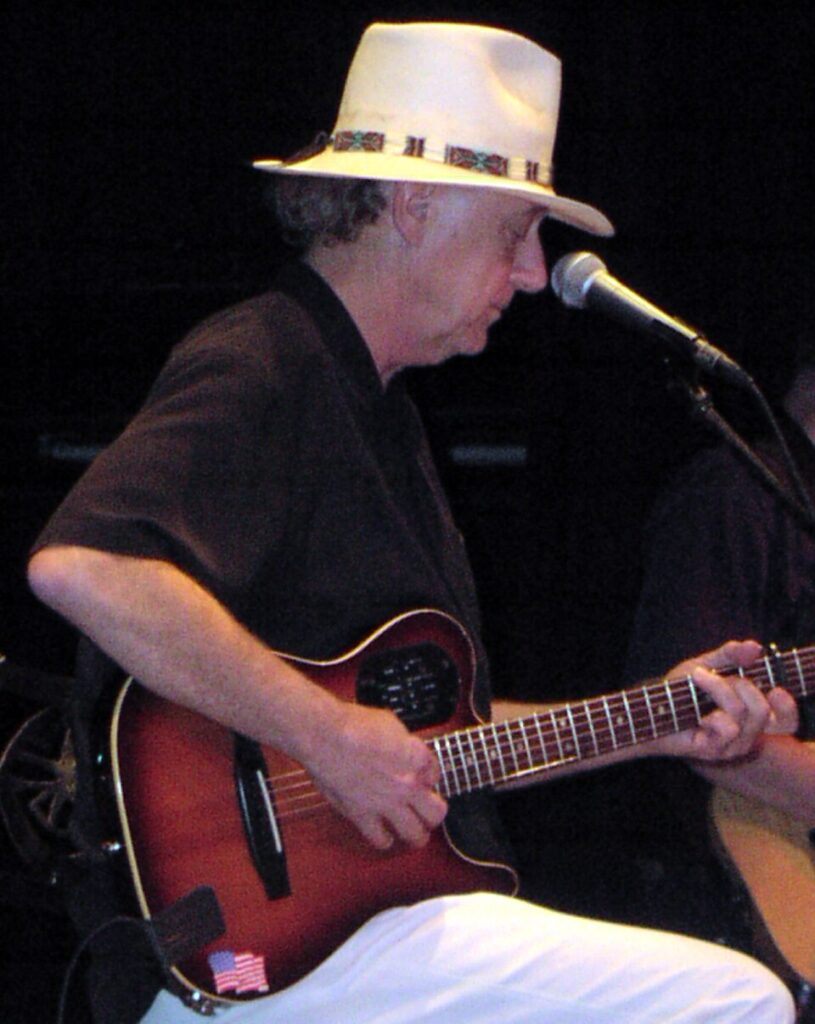
Jerry Jeff Walker
Vocals, guitar, harmonica.
Folk Outlaw Country Progressive Country
Not rated0 Fans
Jerry Jeff Walker (born Ronald Clyde Crosby; March 16, 1942 – October 23, 2020) was an American country and folk singer-songwriter. He was an icon in the progressive country and outlaw country music movement. He is best known for writing the 1968 song "Mr. Bojangles".
Walker was born Ronald Clyde Crosby in Oneonta, New York, on March 16, 1942. His father, Mel, worked as a sports referee and bartender; his mother, Alma (Conrow), was a housewife. His maternal grandparents played for square dances in the Oneonta area – his grandmother, Jessie Conrow, playing piano, while his grandfather played fiddle. During the late 1950s, Crosby was a member of a local Oneonta teen band called the Tones.
After high school, Crosby joined the National Guard, but his thirst for adventure led him to go AWOL, and he was eventually discharged. He went on to roam the country busking for a living in New Orleans and throughout Texas, Florida, and New York, often accompanied by H. R. Stoneback (a friendship referenced in 1970's Stoney). He first played under the stage name of Jerry Ferris, then Jeff Walker, before amalgamating them into Jerry Jeff Walker and legally changing his name to that in the late 1960s.
Walker spent his early folk music days in Greenwich Village in the mid-1960s. He co-founded a band with Bob Bruno in the late 1960s called Circus Maximus that put out two albums, one with the popular FM radio hit "Wind", but Bruno's interest in jazz apparently diverged from Walker's interest in folk music. Walker thus resumed his solo career and recorded the seminal 1968 album Mr. Bojangles with the help of David Bromberg and other influential Atlantic recording artists. He settled in Austin, Texas, in the 1970s, associating mainly with the outlaw country scene that included artists such as Michael Martin Murphey, Willie Nelson, Guy Clark, Waylon Jennings, and Townes Van Zandt. "Jerry Jeff's train songs" (such as "Desperados Waiting for a Train") were cited in the lyrics of Jennings and Nelson's 1977 hit song "Luckenbach, Texas (Back to the Basics of Love)". On September 28, 1974, Walker appeared with Doug Sahm at the Main Hall of Carnegie Hall.
A string of records for MCA and Elektra followed Walker's move to Austin, before he gave up on the mainstream music business and formed his own independent record label. Tried & True Music was founded in 1986, with his wife Susan as president and manager. Susan also founded Goodknight Music as his management company and Tried & True Artists for his bookings. A series of increasingly autobiographical records followed under the Tried & True imprint, which also sells his autobiography, Gypsy Songman. In 2004, Walker released his first DVD of songs from his past performed in an intimate setting in Austin.
Biography summary from English Wikipedia, photograph via Wikimedia Commons.
1942
Born March 16, 1942 in United States
BIRTH
1968
Walker thus resumed his solo career and recorded the seminal 1968 album Mr.
MILESTONE
1986
Tried & True Music was founded in 1986, with his wife Susan as president and manager.
MILESTONE
2004
In 2004, Walker released his first DVD of songs from his past performed in an intimate setting in Austin.
MILESTONE
2020
Died in 2020
IN MEMORIAM
1968
Mr. Bojangles
STUDIO

1969
Driftin’ Way of Life
STUDIO
1969
Five Years Gone
STUDIO
1970
Bein’ Free
STUDIO
1972
Jerry Jeff Walker
STUDIO
1973
¡Viva Terlingua!
LIVE
1974
Walker’s Collectibles
STUDIO
1975
Ridin’ High
STUDIO
1976
It’s a Good Night for Singin’
STUDIO
1977
A Man Must Carry On
STUDIO
1978
Contrary to Ordinary
STUDIO
1978
Jerry Jeff
STUDIO
1979
Too Old to Change
STUDIO
1980
The Best of Jerry Jeff Walker
COMPILATION
1981
Reunion
STUDIO
1982
CowJazz
STUDIO
1987
Gypsy Songman
STUDIO
1989
Live at Gruene Hall
LIVE
1991
Great Gonzos
COMPILATION
1991
Navajo Rug
STUDIO
1992
Hill Country Rain
STUDIO
1994
Christmas Gonzo Style
STUDIO
1994
¡Viva Luckenbach!
LIVE
1995
Night After Night
LIVE
1996
Scamp
STUDIO
1998
Cowboy Boots & Bathin' Suits
STUDIO
1998
Lone Wolf: The Best of Jerry Jeff Walker Elektra Sessions
COMPILATION
1999
Best of the Vanguard Years
COMPILATION
1999
Gypsy Songman: A Life in Song
STUDIO
2001
Gonzo Stew
STUDIO
2001
Ultimate Collection
COMPILATION
2002
20th Century Masters: The Millennium Collection: The Best of Jerry Jeff Walker
COMPILATION
2003
Jerry Jeff Jazz
STUDIO
2005
Best of the Rest
COMPILATION
2005
Too Old To Change / Jerry Jeff
COMPILATION
2009
Moon Child
STUDIO
2012
Live From Dixie’s Bar & Bus Stop
LIVE
2012
Walker's Collectibles & Ridin' High... Plus
COMPILATION
2013
It’s a Good Night for Singin’ & Contrary to Ordinary… Plus
COMPILATION
2014
Mr. Bojangles / Five Years Gone / Bein' Free
COMPILATION
2018
It’s About Time
STUDIO
2020
Mr. Bojangles - The Atco / Elektra Years
COMPILATION
—
Lonestar Café, New York - August 19, 1982
LIVE
Discography via MusicBrainz.
Reviews
Average rating0Based on 0 ratings
5 ★0
4 ★0
3 ★0
2 ★0
1 ★0
Log in or sign up to rate and review.
Log In / Sign UpNo reviews yet for this artist.