
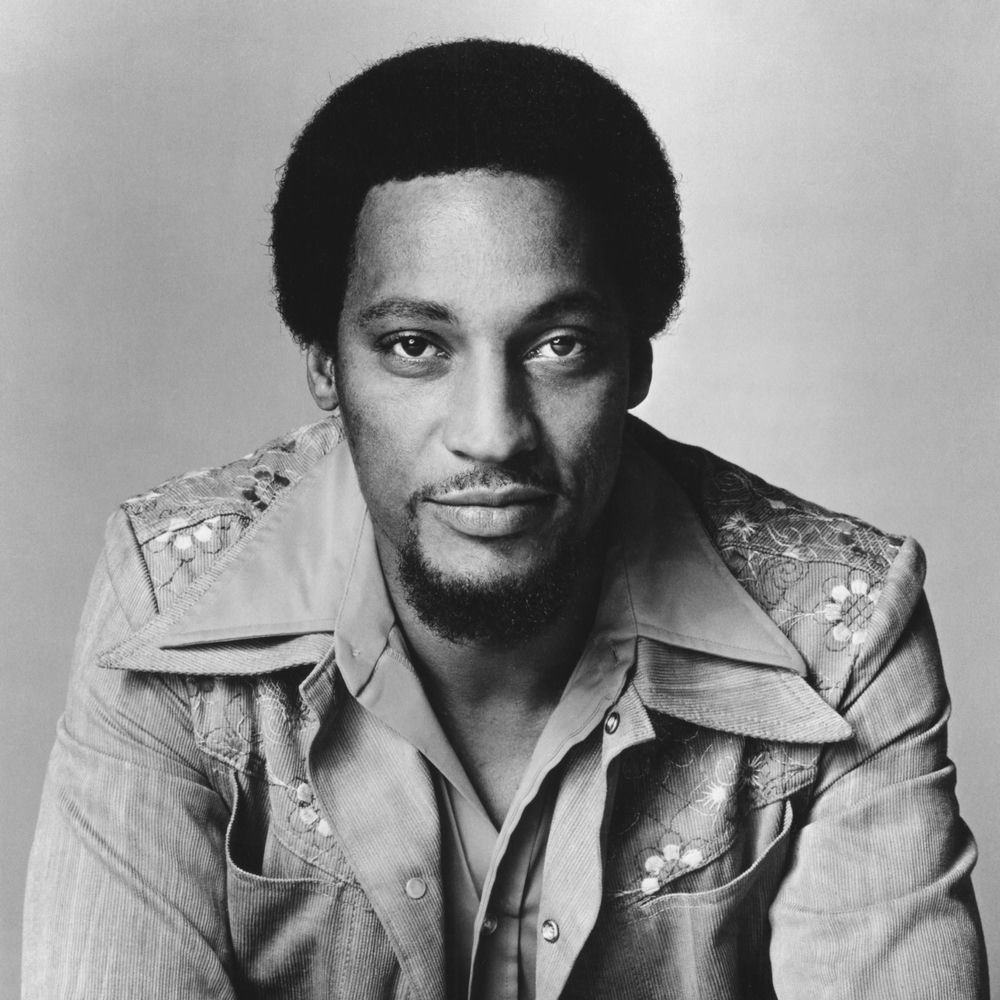
John William Bristol (February 3, 1939 – March 21, 2004) was an American musician, most famous as a songwriter and record producer for the Motown label in the late 1960s and early 1970s. He was a native of Morganton, North Carolina, about which he wrote an eponymous song. His composition "Love Me for a Reason" saw global success when covered by the Osmonds including a number one on the UK charts in 1974. His most famous solo recording was "Hang On in There Baby" recorded in 1974, which reached the top ten in the United States and number 3 in the United Kingdom. Both singles were in the UK top 5 simultaneously.
Bristol first came to local attention in the Detroit area as a member of the soul duo Johnny & Jackey with Jackey Beavers, an associate Bristol met while in the US Air Force. The pair recorded two singles in 1959 for Anna Records, a label owned by Gwen Gordy (Berry Gordy's sister) and Billy Davis and four 45s for Gwen Gordy and Harvey Fuqua's Tri-Phi label, none of which was a success beyond the Midwestern United States.
In the mid-1960s, Motown had absorbed Tri-Phi and Bristol began working with Fuqua as a songwriter and producer. Amongst their successes as producers were hit singles: Marvin Gaye and Tammi Terrell's "Ain't No Mountain High Enough" (1967), "Your Precious Love" (1967), and "If I Could Build My Whole World Around You" (1968); Edwin Starr's "Twenty-Five Miles" (1969); and David Ruffin's "My Whole World Ended (The Moment You Left Me)" (1969).
Bristol flourished at Motown working with some of the label's best-selling acts. His producer and/or writer credits included the Velvelettes' "These Things Will Keep Me Loving You" (1966); Gladys Knight & the Pips' "I Don't Want to Do Wrong" (1971) and "Daddy Could Swear, I Declare" (1973); and Jr. Walker & the All Stars, who charted with a number of Bristol-written singles and albums, including "What Does It Take (To Win Your Love)" (1969), "Gotta Hold On to This Feeling" (1970), "Way Back Home" (1971) and "Walk in the Night" (1971). One of his last successes was Jermaine Jackson's first solo record, "That's How Love Goes" (1972).
Notably, Bristol was the producer and co-writer of the final singles for both Diana Ross & the Supremes and Smokey Robinson & the Miracles, before each group lost its namesake lead singer. While the Miracles' "We've Come Too Far to End It Now" (1972) was an original, the Supremes' "Someday We'll Be Together" (1969) was a remake of a Johnny & Jackey single from 1961. Bristol is the male voice on the Supremes' version of "Someday We'll Be Together", singing response to Diana Ross' lead vocal. (Ross actually recorded the song as her initial solo release with session singers the Waters Sisters.)
Biography summary from English Wikipedia, photograph via Wikimedia Commons.
1939
Born February 3, 1939 in United States
BIRTH
1969
Walker & the All Stars, who charted with a number of Bristol-written singles and albums, including "What Does It Take (To Win Your Love)" (1969), "Gotta Hold On to This Feeling" (1970), "Way Back…
MILESTONE
1972
While the Miracles' "We've Come Too Far to End It Now" (1972) was an original, the Supremes' "Someday We'll Be Together" (1969) was a remake of a Johnny & Jackey single from 1961.
MILESTONE
1974
His composition "Love Me for a Reason" saw global success when covered by the Osmonds including a number one on the UK charts in 1974.
MILESTONE
2004
Died in 2004
IN MEMORIAM
1974
Hang On in There Baby
ALBUM

1975
Feeling the Magic
ALBUM
1976
Bristol's Creme
ALBUM
1978
Strangers
ALBUM
Discography via MusicBrainz.
Reviews
Average rating0Based on 0 ratings
5 ★0
4 ★0
3 ★0
2 ★0
1 ★0
Log in or sign up to rate and review.
Log In / Sign UpNo reviews yet for this artist.