
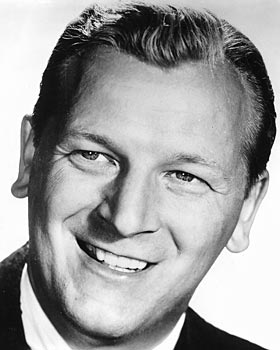
IN MEMORIAM 1922 – 1996
Les Baxter
Piano with Les Baxter and His Orchestra, Les Baxter's Drums, Les Baxter, His Chorus and Orchestra.
Exotica Film Score Lounge music Swing
Not rated0 Fans
Leslie Thompson Baxter (March 14, 1922 – January 15, 1996) was an American composer, conductor, and musician. After working as an arranger and composer for swing bands, he developed his own style of easy listening music, known as exotica, and scored over 250 radio, television and motion pictures numbers.
Baxter studied piano at the Detroit Conservatory of Music before moving to Los Angeles for further studies at Pepperdine College. From 1943 on he played tenor and baritone saxophone for the Freddie Slack big band. Abandoning a concert career as a pianist, he turned to popular music as a singer. At the age of 23 he joined Mel Tormé's Mel-Tones, singing on Artie Shaw records such as "What Is This Thing Called Love?"
Baxter then turned to arranging and conducting for Capitol Records in 1950 and conducted the orchestra in two early Nat King Cole hits, "Mona Lisa" and "Too Young". He also recorded Yma Sumac's first album: Voice of the Xtabay, which can be considered one of the first recordings of exotica. In 1951, he made the original recording of "Quiet Village", which years later became a hit for Martin Denny. In 1953, he scored his first movie, the sailing travelogue Tanga Tika.
With his own orchestra, he released a number of hits, including "Ruby" (1953), "Unchained Melody" (1955), and "The Poor People of Paris" (1956), and is remembered for a version of "Sinner Man" (1956), definitively setting the sound with varying tempos, orchestral flourishes, and wailing background vocals. "Unchained Melody" was the first million seller for Baxter and was awarded a gold disc. "The Poor People of Paris" also sold over one million copies. He also achieved success with concept albums of his own orchestral suites: Le Sacre Du Sauvage, Festival Of The Gnomes, Ports Of Pleasure, and Brazil Now, the first three for Capitol and the fourth on Gene Norman's Crescendo label. The list of musicians on these recordings includes Plas Johnson and Clare Fischer.
In the 1960s, he formed Les Baxter's Balladeers, a conservative folk group in suits that at one time featured a young David Crosby. Later, he used some of the same singers from that group for a studio project called The Forum. They had a minor hit in 1967 with their song "The River Is Wide", which implemented the Wall of Sound technique originally developed by Phil Spector. He worked in radio as musical director of The Halls of Ivy and the Bob Hope and Abbott and Costello shows.
Biography summary from English Wikipedia, photograph via Wikimedia Commons.
1922
Born March 14, 1922 in United States
BIRTH
1950
At the age of 23 he joined Mel Tormé's Mel-Tones, singing on Artie Shaw records such as "What Is This Thing Called Love?" Baxter then turned to arranging and conducting for Capitol Records in…
MILESTONE
1953
With his own orchestra, he released a number of hits, including "Ruby" (1953), "Unchained Melody" (1955), and "The Poor People of Paris" (1956), and is remembered for a version of "Sinner Man" (1956), definitively…
MILESTONE
—
Member of Les Baxter and His Orchestra
BAND
—
Member of Les Baxter's Drums
BAND
—
Member of Les Baxter, His Chorus and Orchestra
BAND
1996
Died in 1996
IN MEMORIAM
1947
Music Out of the Moon
ALBUM

1948
Perfume Set to Music
ALBUM
1954
Thinking of You
ALBUM
1954
The Passions
ALBUM
1954
Whatever Lola Wants
EP
1955
Kaleidoscope
ALBUM
1956
La Femme
ALBUM
1956
Caribbean Moonlight
ALBUM
1957
Midnight on the Cliffs
ALBUM
1957
'Round the World With Les Baxter
ALBUM
1957
Skins!
ALBUM
1958
Space Escapade
ALBUM
1959
African Jazz
ALBUM
1960
Young Pops
ALBUM
1960
Teen Drums
ALBUM
1961
Broadway ’61
ALBUM
1961
Jewels of the Sea
ALBUM
1964
Original Quiet Village
ALBUM
1968
Love Is Blue
ALBUM
1969
Moog Rock
ALBUM
1970
Que Mango!
ALBUM
1970
Million Seller Hits
ALBUM
1995
The Lost Episode
ALBUM
1996
By Popular Request
ALBUM
Discography via MusicBrainz.
Reviews
Average rating0Based on 0 ratings
5 ★0
4 ★0
3 ★0
2 ★0
1 ★0
Log in or sign up to rate and review.
Log In / Sign UpNo reviews yet for this artist.