
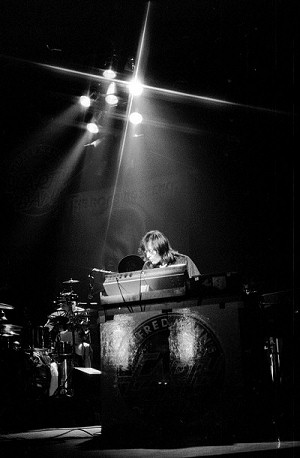
Manfred Mann was an English-based rock band formed in London in 1962. They were named after their keyboardist Manfred Mann. The group had two lead vocalists: Paul Jones from 1962 to 1966 and Mike d'Abo from 1966 to 1969. Other members of various group line-ups were Mike Hugg, Mike Vickers, Dave Richmond, Tom McGuinness, Jack Bruce, Lyn Dobson, Henry Lowther and Klaus Voormann.Prominent in the Swinging London scene of the 1960s, the group regularly appeared in the UK Singles Chart. Their breakthrough hit "5-4-3-2-1" (1964) was the theme tune for the ITV pop music show Ready Steady Go!. The band achieved a UK and US No. 1 hit with "Do Wah Diddy Diddy" (1964) and two further UK No. 1 singles, "Pretty Flamingo" (1966) and "Mighty Quinn" (1968).After the band split in 1969, Mann went on to form Manfred Mann Chapter Three (1969–1971) and Manfred Mann's Earth Band (1971–present).The Mann–Hugg Blues Brothers were formed in London in 1962 by keyboard player Manfred Mann and drummer/vibes/piano player Mike Hugg, who had previously been members of a house band in Clacton-on-Sea that also featured Graham Bond. Bringing a shared love of jazz to the British blues boom then sweeping London's clubs, the band went through several personnel changes during their formative period, with members including Tony Smith on bass guitar, Glyn Thomas on drums, and four brass players. By March 1963, the line-up had settled with Mann, Hugg, Mike Vickers on guitar, alto saxophone and flute, Dave Richmond on bass guitar and Paul Jones as lead vocalist and harmonica player. By this time they had changed their name to Manfred Mann & the Manfreds. Gigging throughout late 1962 and early 1963, they soon attracted attention for their distinctive sound.After changing their name to Manfred Mann at the behest of their label's producer John Burgess, the group signed with His Master's Voice, a sub-label of EMI Records, in March 1963 and began their recorded output that July with the slow blues instrumental single "Why Should We Not?", which they performed on their first appearance on television on a New Year's Eve show. It failed to chart, as did its follow-up (with vocals), "Cock-a-Hoop". The overdubbed instrumental soloing on woodwinds, vibes, harmonica and second keyboard lent considerable weight to the group's sound, and demonstrated the jazz-inspired technical prowess in which they took pride.
Biography summary from English Wikipedia, photograph via Wikimedia Commons.
1962–1963FormationCAREER
1962Manfred Mann was an English-based rock band formed in London in 1962.MILESTONE
1962The Mann–Hugg Blues Brothers were formed in London in 1962 by keyboard player Manfred Mann and drummer/vibes/piano player Mike Hugg, who had previously been members of a house band in Clacton-on-Sea that also featured…MILESTONE
1963–1966Paul Jones eraCAREER
1963After changing their name to Manfred Mann at the behest of their label's producer John Burgess, the group signed with His Master's Voice, a sub-label of EMI Records, in March 1963 and began their…MILESTONE
1966–1969Mike d'Abo eraCAREER
1969–presentSpin-off bandsCAREER
—
Manfred Mann
CURRENT MEMBER
—
Paul Jones
CURRENT MEMBER
1964
The Manfred Mann Album
ALBUM

1964
Groovin’ With Manfred Mann
EP
1964
Manfred Mann’s Cock‐a‐Hoop With 5 4 3 2 1
EP
1964
The Five Faces of Manfred Mann
ALBUM
1965
My Little Red Book of Winners!
ALBUM
1965
Mann Made
ALBUM
1965
No Living Without Loving
EP
1965
The One in the Middle
EP
1966
AsWas
EP
1966
As Is
ALBUM
1966
Mann Made Hits
COMPILATION
1966
Machines
EP
1966
Instrumental Asylum
EP
1966
Pretty Flamingo
ALBUM
1967
Soul of Mann
COMPILATION
1968
What a Mann
COMPILATION
1968
Up the Junction
SOUNDTRACK
1968
Mighty Garvey!
ALBUM
1969
Aktuelle Hits
EP
1970
This Is… Manfred Mann
COMPILATION
1972
The Greatest
COMPILATION
1974
The Best of Manfred Mann
COMPILATION
1976
Mannerisms
COMPILATION
1977
The Best Of Manfred Mann
COMPILATION
1977
The Best of Manfred Mann
COMPILATION
1978
Attention!
COMPILATION
1982
The History of Rock, Volume Seven
COMPILATION
1987
The Best of Manfred Mann
ALBUM
1987
The Singles Plus
COMPILATION
1988
Ha, Ha Said The Clown
COMPILATION
1989
Manfred Mann
COMPILATION
1989
EP Collection
COMPILATION
1989
First Hits
COMPILATION
1992
The Singles Album
COMPILATION
1992
The Best of Manfred Mann
COMPILATION
1992
The Most of Manfred Mann
COMPILATION
1993
Ages of Mann
COMPILATION
1993
The Best of the EMI Years
COMPILATION
1993
The Greatest Hits
COMPILATION
1993
The Best of Manfred Mann 1964–1966
COMPILATION
1995
The Manfred Mann Album / The Five Faces of Manfred Mann
COMPILATION
1995
Basic: Original Hits
COMPILATION
1996
Four Manfred Mann Originals
COMPILATION
1996
Pretty Flamingo
COMPILATION
1996
The World of Manfred Mann
COMPILATION
1997
The Very Best of the Fontana Years
COMPILATION
1997
The Ascent of Mann: The Fontana Years, 1966 to 1969
COMPILATION
1997
The Best of Manfred Mann
ALBUM
1997
The Very Best of Manfred Mann
COMPILATION
1998
Manfred Mann at Abbey Road 1963 to 1966
COMPILATION
2000
The Singles
COMPILATION
2000
All Manner of Menn: 1963–1969 and More…
COMPILATION
2000
The Story
COMPILATION
2000
Best of the 60’s
COMPILATION
2001
Pretty Flamingo / The Five Faces of Manfred Mann
COMPILATION
2001
The Manfred Mann Album / My Little Red Book of Winners
COMPILATION
2002
5‐4‐3‐2‐1
COMPILATION
2002
Classic Masters
COMPILATION
2003
The Complete Greatest Hits Of Manfred Mann 1963 - 2003
COMPILATION
2003
A’s B’s & EP’s
COMPILATION
2006
Original Manfred Mann
COMPILATION
2006
World of Mann: The Very Best of Manfred Mann & Manfred Mann’s Earth Band
COMPILATION
2007
Down the Road Apiece: Their EMI Recordings 1963–1966
COMPILATION
2010
Hit Mann! The Essential Singles 1963–1969
COMPILATION
2011
6 x 6: The Sixties
COMPILATION
2013
EP Collection
COMPILATION
2015
The Greatest Hits + More
COMPILATION
2015
Do Wah Diddy Diddy (remastered)
COMPILATION
2018
Greatest Hits
COMPILATION
2019
Radio Days Vol 1 / The Paul Jones Era (Live At The BBC 64-66)
COMPILATION
2019
Radio Days Vol 2 / The Mike D’Abo Era (Live at the BBC 66–69)
INTERVIEW
2019
Radio Days Vol 3 / Chapter III (Live Sessions & Studio Rarities)
LIVE
2019
The Mighty Quinn
COMPILATION
—
BBC - The Archive Series, Manfred Mann
COMPILATION
—
Chapter Two: The Best of the Fontana Years
COMPILATION
—
Manfred Mann
COMPILATION
—
Manfred Mann Made Hits
COMPILATION
—
Mann Made Hits and Other Delicacies
COMPILATION
—
The Best of Manfred Mann
COMPILATION
Discography via MusicBrainz.
Reviews
Average rating0Based on 0 ratings
5 ★0
4 ★0
3 ★0
2 ★0
1 ★0
Log in or sign up to rate and review.
Log In / Sign UpNo reviews yet for this band.