
BAND PROFILE est. 1962
Status Quo
United Kingdom
Rockboogie rockhard rockpsychedelia (early)
Not rated0 Fans
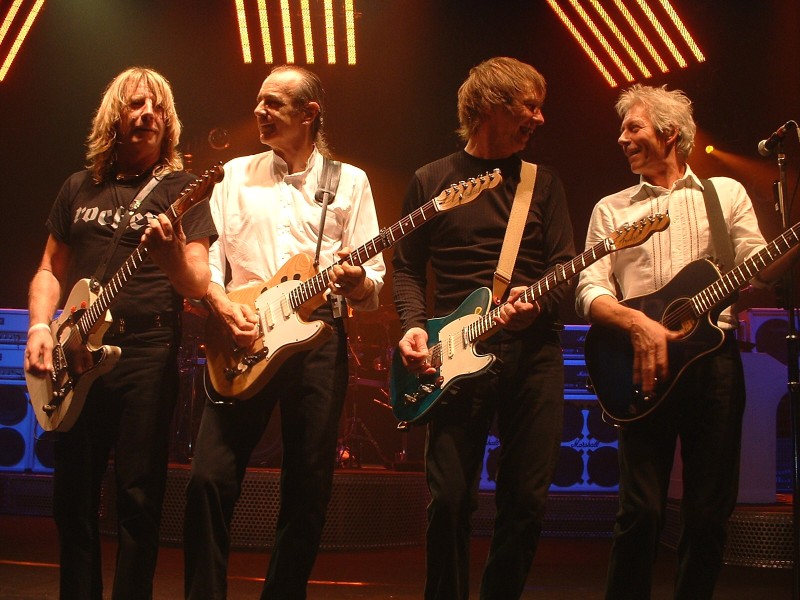
Status Quo are an English rock band formed in London in 1962. Beginning with "Pictures of Matchstick Men" in 1968, they have had over 60 chart hits in the UK – more than any other band – with further hits including "Caroline", "Down Down", "Rain", "Rockin' All Over the World", "Whatever You Want" and "What You're Proposing". 22 of these reached the Top 10 in the UK singles chart, and 57 reached the Top 40. They have released over 100 singles and 33 studio albums. Since reaching number five on the UK albums chart in 1972 with Piledriver, Status Quo have placed 29 consecutive studio albums on the UK charts, including 20 Top 10 studio albums. In 2012, they were announced as the tenth best-selling group of all time on the UK singles chart with 7.2 million singles sales in their homeland alone. As of 2015, they were one of only 50 artists to have achieved more than 500 total weeks on the UK Albums Chart.In July 1985, Status Quo opened Live Aid at Wembley Stadium with "Rockin' All Over the World". In 1991, they received the Brit Award for Outstanding Contribution to Music. In 2014, preparing to headline that year's Download Festival, they won the Service to Rock award at the Kerrang! Awards. Status Quo appeared on the BBC's Top of the Pops more than any other band. Their success and longevity as well, in part, as their connections to the British Royal Family, including philanthropic work with the Prince's Trust, have seen them frequently described as a "national institution" by the media. According to Status Quo, they have sold over 118 million records worldwide.Status Quo were formed in 1962 under the name the Paladins by Francis Rossi (vocals, guitar) and Alan Lancaster (bass) at Sedgehill Comprehensive School, Catford, London, along with classmates Jess Jaworski (keyboards) and Alan Key (drums). In 1963, Key was replaced by John Coghlan and the band changed their name to the Spectres. After changing their name, Lancaster's father arranged for the group to perform weekly at a venue called the Samuel Jones Sports Club in Dulwich, London, where they were noticed by Pat Barlow, a gasfitter and budding pop music manager. Barlow became the group's manager and secured them spots at venues around London, such as El Partido in Lewisham and Café des Artistes in Chelsea. In 1965, when Rossi, Lancaster and Jaworski left school, Jaworski opted to leave the band and was replaced by Roy Lynes.During 1965, the band played a summer season residency at Butlins Holiday Camp in Minehead, during which they met Rick Parfitt, who was playing guitar with a cabaret band called the Highlights. By the end of the residency, Rossi and Parfitt – who had become close friends – made a commitment to stay friends and work together at some point in the future. On 18 July 1966, the Spectres signed a five-year deal with Piccadilly Records, releasing two singles that year, "I (Who Have Nothing)" (first recorded by Joe Sentieri and most famously covered by Tom Jones) and "Hurdy Gurdy Man" (an original song by Alan Lancaster), and one the next year called "(We Ain't Got) Nothin' Yet" (originally recorded by New York psychedelic band the Blues Magoos). All three singles failed to make an impact on the charts.In 1967, the group's sound began moving towards psychedelia and they renamed themselves Traffic, but were soon forced to change it to Traffic Jam to avoid confusion with Steve Winwood's new band Traffic, following an argument over who had registered the name first. The band secured an appearance on BBC Radio's Saturday Club, but in June their next single, "Almost But Not Quite There" (an original song by Francis Rossi), underperformed. The following month saw Parfitt, at the request of manager Pat Barlow, joining the band as rhythm guitarist and vocalist. Shortly after Parfitt's recruitment, in August 1967, the band officially became the Status Quo.
Biography summary from English Wikipedia, photograph via Wikimedia Commons.
1962–1967Formative yearsCAREER
1968–1970Breakthrough and development of classic styleCAREER
1970–1981"Frantic Four" eraCAREER
1981–1990Line-up changes, Live Aid and In The Army NowCAREER
1991–2009Rock 'Til You Drop, Don't Stop and continued touringCAREER
2010–2013Hello Quo, "Frantic Four" reunion tours and Bula Quo!CAREER
2014–presentAquostic, Parfitt's death and BackboneCAREER
—
John Coghlan
CURRENT MEMBER
—
Alan Lancaster
CURRENT MEMBER

1967
Rick Parfitt
— left 2016
PAST MEMBER
1965
Roy Lynes
— left 1970
PAST MEMBER
1982
Pete Kircher — left 1985
PAST MEMBER
1985
Jeff Rich — left 2000
PAST MEMBER
2000
Matt Letley — left 2013
PAST MEMBER
1962
Francis Rossi
CURRENT MEMBER
1976
Andy Bown
CURRENT MEMBER
1985
John Edwards
CURRENT MEMBER
2013
Leon Cave
CURRENT MEMBER
2016
Richie Malone
CURRENT MEMBER
1968
Picturesque Matchstickable Messages From the Status Quo
ALBUM

1969
Spare Parts
ALBUM
1970
Ma Kelly’s Greasy Spoon
ALBUM
1971
Dog of Two Head
ALBUM
1972
Piledriver
ALBUM
1973
Hello!
ALBUM
1973
Golden Hour of Status Quo
COMPILATION
1973
The Best Of Status Quo
COMPILATION
1974
Le double disque d'or de Status Quo
COMPILATION
1974
Quo
ALBUM
1975
On the Level
ALBUM
1976
Blue for You
ALBUM
1976
The Rest of Status Quo
COMPILATION
1976
Pictures of Matchstick Men
COMPILATION
1977
Rockin' All Over the World
COMPILATION
1977
Rockin’ All Over the World
ALBUM
1978
If You Can’t Stand the Heat…
ALBUM
1978
Status Quo
COMPILATION
1979
In My Chair
COMPILATION
1979
Just for the Record
COMPILATION
1979
Whatever You Want
ALBUM
1980
Just Supposin’
ALBUM
1980
Now Hear This
ALBUM
1980
Status Quo - Super Stars
COMPILATION
1980
12 Gold Bars
COMPILATION
1981
Never Too Late
ALBUM
1981
Gigantes Del Pop
COMPILATION
1981
The Music of Status Quo Volume 1, 1972-1974
COMPILATION
1982
1+9+8+2
ALBUM
1983
Back to Back
ALBUM
1984
12 Gold Bars Volume I+I
COMPILATION
1984
The History of Rock, Volume Twenty One
COMPILATION
1985
12 Gold Bars, Volume 2
COMPILATION
1985
To Be or Not to Be
COMPILATION
1986
The Best of Status Quo 1972-1986
COMPILATION
1986
In the Army Now
ALBUM
1987
Hit Album
COMPILATION
1987
The Collection
COMPILATION
1988
Ain’t Complaining
ALBUM
1988
Quo-tations, Vol. 1
COMPILATION
1988
Quo-tations, Volume 2
COMPILATION
1989
Die Grossen Erfolge Einer Supergruppe
COMPILATION
1989
Best of the Early Years
COMPILATION
1989
Status Quo
COMPILATION
1989
The Best of 1968-1971
COMPILATION
1989
Perfect Remedy
ALBUM
1990
B-Sides & Rarities
COMPILATION
1990
Rocking All Over the Years
COMPILATION
1990
Spinning Wheel Blues
COMPILATION
1990
The Early Works
COMPILATION
1991
Never Too Late / Back to Back
COMPILATION
1991
Quo / Blue for You
COMPILATION
1991
.If You Can't Stand The Heat / 1982
COMPILATION
1991
Whatever You Want / Just Supposin'
COMPILATION
1991
A Few Bars More
COMPILATION
1991
Rock ’til You Drop
ALBUM
1991
The Hitmachine
COMPILATION
1992
Tune to the Music
COMPILATION
1993
The Gallery
COMPILATION
1993
All the Hits...And More
COMPILATION
1993
Ice in the Sun
COMPILATION
1994
It's Only Rock & Roll
COMPILATION
1994
Thirsty Work
ALBUM
1994
The Very Best
COMPILATION
1994
Original Recordings
COMPILATION
1995
Pictures of Matchstick Men
COMPILATION
1995
Whatever You Want: The Very Best of Status Quo
COMPILATION
1995
The Other Side of Status Quo
COMPILATION
1996
The Very Best of Status Quo
COMPILATION
1996
Best - Caroline
COMPILATION
1996
Don’t Stop
ALBUM
1997
Status Quo
COMPILATION
1998
The Complete Status Quo
COMPILATION
1998
Whatever You Want: The Very Best of Status Quo
COMPILATION
1998
Best of Status Quo Ice in the Sun
COMPILATION
1998
Master Series
COMPILATION
1999
The Essential Status Quo, Volume One
COMPILATION
1999
The Essential Status Quo, Volume Two
COMPILATION
1999
Greatest Hits and More
COMPILATION
1999
Under the Influence
ALBUM
2000
Break the Rules
COMPILATION
2000
At Their Best
COMPILATION
2000
Famous in the Last Century
ALBUM
2000
The Singles Collection 1966-73
COMPILATION
2000
Rockin’ All Over the World
COMPILATION
2000
Tune to the Music
COMPILATION
2000
The Best of Status Quo
COMPILATION
2000
The Essential Status Quo, Volume Three
COMPILATION
2000
Classic Status Quo
COMPILATION
2000
Media Markt Collection: Status Quo
COMPILATION
2002
Riffs
ALBUM
2002
Heavy Traffic
ALBUM
2005
The Party Ain’t Over Yet
ALBUM
2007
In Search of the Fourth Chord
ALBUM
2011
Quid Pro Quo
ALBUM
2013
Bula Quo!
ALBUM
2014
Aquostic: Stripped Bare
ALBUM
2016
Aquostic II: That's a Fact!
ALBUM
2019
Backbone
ALBUM
2024
Driving to Glory
ALBUM
Discography via MusicBrainz.
Reviews
Average rating0Based on 0 ratings
5 ★0
4 ★0
3 ★0
2 ★0
1 ★0
Log in or sign up to rate and review.
Log In / Sign UpNo reviews yet for this band.