
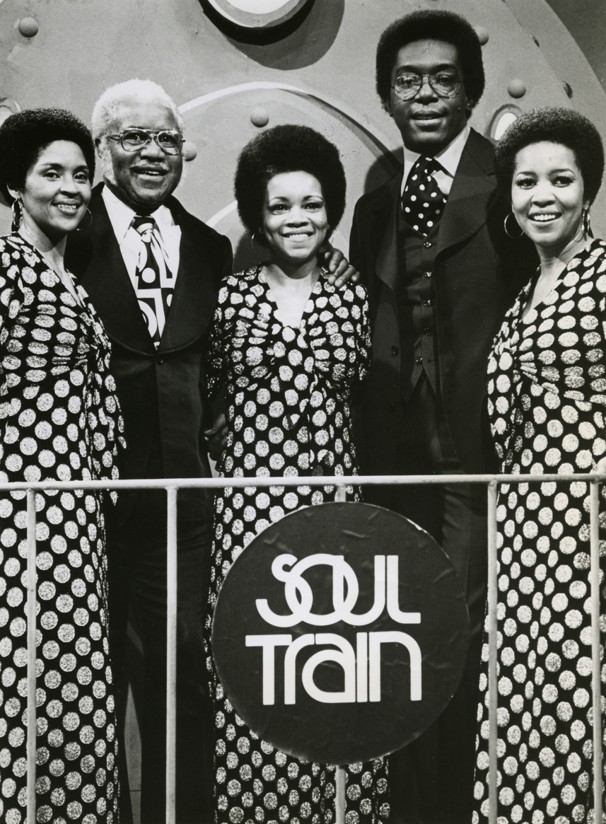
The Staple Singers was an American gospel, soul, and R&B singing group. Roebuck "Pops" Staples (December 28, 1914 – December 19, 2000), the patriarch of the family, formed the group with his children Cleotha (April 11, 1934 – February 21, 2013), Pervis (November 18, 1935 – May 6, 2021), and Mavis (b. July 10, 1939). Yvonne (October 23, 1937 – April 10, 2018) replaced her brother when he was drafted into the U.S. Army, and again in 1970. They are best known for their 1970s hits "Respect Yourself", "I'll Take You There", "If You're Ready (Come Go with Me)", and "Let's Do It Again". While the family name is Staples, the group used "Staple" commercially.First child to Roebuck "Pops" Staples and his wife Oceola Staples, Cleotha was born in Drew, Mississippi, in 1934. Two years later, Roebuck moved his family from Mississippi to Chicago. Roebuck and Oceola's children, son Pervis and daughters, Mavis and Yvonne, were born in Chicago. Roebuck worked in steel mills and meatpacking plants while his family of four children grew up. The family began appearing in Chicago-area churches in 1948. Their first public singing appearance was at the Mount Zion Church, Chicago, where Roebuck's brother, the Rev. Chester Staples, was pastor.They signed their first professional contract in 1952. During their early career, they recorded in an acoustic gospel-folk style with various labels: United Records, Vee-Jay Records (their "Uncloudy Day" and "Will the Circle Be Unbroken?" were best sellers), Checker Records, Riverside Records, and then Epic Records in 1965. "Uncloudy Day" was an early influence on Bob Dylan, who said of it in 2015, "It was the most mysterious thing I'd ever heard ... I'd think about them even at my school desk ... Mavis looked to be about the same age as me in her picture (on the cover of "Uncloudy Day") ... Her singing just knocked me out ... And Mavis was a great singer—deep and mysterious. And even at the young age, I felt that life itself was a mystery."The move to Epic yielded a run of albums, including the live in-church Freedom Highway album produced by Billy Sherrill; the title track of which was a civil rights movement protest song penned by Pops Staples. It was on Epic that the Staple Singers developed a style more accessible to mainstream audiences, with "Why (Am I Treated So Bad)" and "For What It's Worth" (Stephen Stills) in 1967. In 1968, the Staple Singers signed to Stax Records and released two albums with Steve Cropper—Soul Folk in Action and We'll Get Over, Pervis returning for them. After Cropper left Stax, Al Bell produced their recordings, conducting the rhythm sessions at the famed Muscle Shoals Sound Studio and cutting the overdubs himself with engineer/musician Terry Manning at Memphis's Ardent Studios, moving in a more funk and soul direction. Their song "Brand New Day", written by Al Kooper for the film, was used as the theme song (and for the opening title credits) of The Landlord (1970).The Staple Singers' first Stax hit was "Heavy Makes You Happy (Sha-Na-Boom-Boom)" in early 1971. Their late 1971 recording of "Respect Yourself", written by Luther Ingram and Mack Rice, peaked at number two on the Billboard R&B chart and number 12 on the Billboard Hot 100. Both hits sold over one million copies and were each awarded a gold disc by the Recording Industry Association of America. The song's theme of self-empowerment had universal appeal, released in the period immediately following the intense American civil rights movement of the 1960s. In 1972, "I'll Take You There" topped both Billboard charts. In 1973, "If You're Ready (Come Go With Me)" reached number 9 on the Hot 100 and number one on the R&B chart.
Biography summary from English Wikipedia, photograph via Wikimedia Commons.
1914Roebuck "Pops" Staples (December 28, 1914 – December 19, 2000), the patriarch of the family, formed the group with his children Cleotha (April 11, 1934 – February 21, 2013), Pervis (November 18, 1935 –…MILESTONE
1952They signed their first professional contract in 1952.MILESTONE
1968In 1968, the Staple Singers signed to Stax Records and released two albums with Steve Cropper—Soul Folk in Action and We'll Get Over, Pervis returning for them.MILESTONE
1973In 1973, "If You're Ready (Come Go With Me)" reached number 9 on the Hot 100 and number one on the R&B chart.MILESTONE
—
Pops Staples
CURRENT MEMBER
—
Mavis Staples
CURRENT MEMBER
—
Yvonne Staples
CURRENT MEMBER
—
Pervis Staples
CURRENT MEMBER
—
Cleotha Staples
CURRENT MEMBER
1959
Uncloudy Day
ALBUM

1960
Will the Circle Be Unbroken
COMPILATION
1961
Swing Low
ALBUM
1962
Hammer and Nails
ALBUM
1962
The 25th Day of December
ALBUM
1963
Swing Low Sweet Chariot
COMPILATION
1963
This Land
ALBUM
1965
This Little Light
ALBUM
1965
Freedom Highway
LIVE
1965
Amen!
ALBUM
1966
Why
ALBUM
1967
For What It’s Worth
ALBUM
1967
Pray On
ALBUM
1968
Soul Folk in Action
ALBUM
1968
What the World Needs Now Is Love
ALBUM
1969
We’ll Get Over
ALBUM
1971
The Staple Swingers
ALBUM
1972
Be Altitude: Respect Yourself
ALBUM
1973
Be What You Are
ALBUM
1974
City in the Sky
ALBUM
1975
Let’s Do It Again
SOUNDTRACK
1976
Pass It On
ALBUM
1977
Family Tree
ALBUM
1978
Unlock Your Mind
ALBUM
1979
Chronicle: Their Greatest Stax Hits
COMPILATION
1981
Hold On to Your Dream
ALBUM
1981
This Time Around
ALBUM
1984
Turning Point
ALBUM
1985
The Staple Singers
ALBUM
1986
The Best of the Staple Singers
COMPILATION
1987
Respect Yourself: The Best of the Staple Singers
COMPILATION
1988
The Legendary Staple Singers
COMPILATION
1990
Pray On
COMPILATION
1991
Great Day
COMPILATION
1991
Freedom Highway
COMPILATION
1992
Pray On
COMPILATION
1994
Soul Folk in Action / We’ll Get Over
COMPILATION
1994
Uncloudy Day
COMPILATION
1995
Uncloudy Day
COMPILATION
1995
Gold
COMPILATION
1996
I Had A Dream
COMPILATION
1997
The Vee Jay Gospel Years
COMPILATION
1998
The Best of the Staple Singers
COMPILATION
1998
The Very Best of the Staple Singers, Vol. 2: On My Way to Heaven
COMPILATION
1999
Staple Singers Greatest Hits
COMPILATION
1999
Gospel Greats
COMPILATION
2000
Glory! It's the Staple Singers
COMPILATION
2001
Good News: The Collection
COMPILATION
2002
Pray On, My Child
COMPILATION
2004
The Ultimate Staple Singers: A Family Affair 1955-1984
COMPILATION
2006
Stax Profiles: The Staple Singers
COMPILATION
2006
Come Up in Glory: The Best of the Vee-Jay Years
COMPILATION
2007
Uncloudy Day / Will the Circle Be Unbroken
COMPILATION
2007
The Very Best Of
COMPILATION
2007
The Best of the Vee-Jay Years
COMPILATION
2015
Faith And Grace: A Family Journey 1953-1976
COMPILATION
2016
Four Classic Albums Plus Singles
COMPILATION
2016
Amen!/Why
COMPILATION
2017
Stax Classics
COMPILATION
2018
For What It's Worth: The Complete Epic Recordings 1964-1968
COMPILATION
2018
The Staple Singers Collection 1953-62
COMPILATION
2019
The First Family of Gospel: 1953-1961
COMPILATION
2020
Come Go With Me: The Stax Collection
COMPILATION
2020
Singles, Live & More
COMPILATION
2024
Africa 80
LIVE
—
A Gospel Christmas Card
COMPILATION
—
WPLJ FM, New York City NY, June 26, 1972
LIVE
Discography via MusicBrainz.
Reviews
Average rating0Based on 0 ratings
5 ★0
4 ★0
3 ★0
2 ★0
1 ★0
Log in or sign up to rate and review.
Log In / Sign UpNo reviews yet for this band.