
BAND PROFILE 1959–1970
Tommy James And The Shondells
United States
Rockbubblegumpsychedelic
Not rated0 Fans
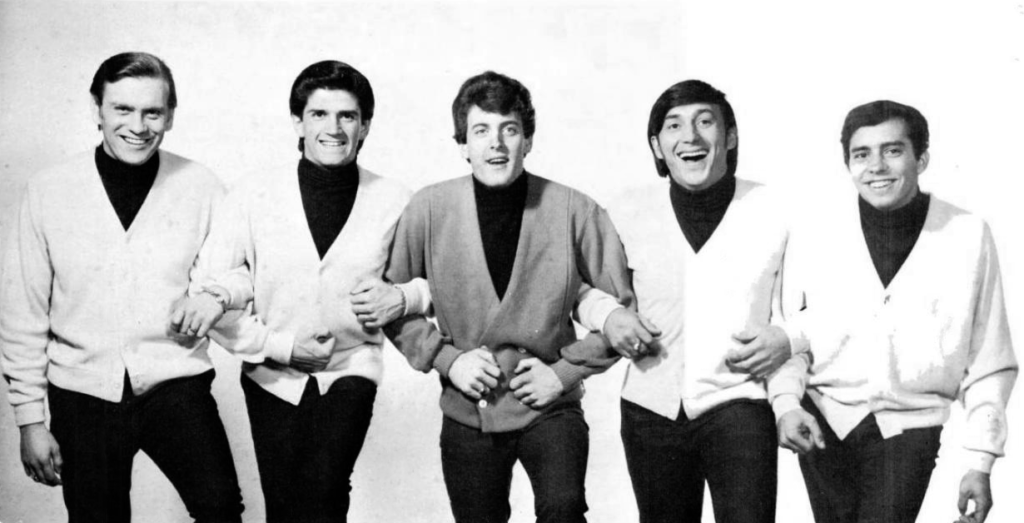
Tommy James and the Shondells is an American rock band formed in Niles, Michigan, in 1964. The band has had two No. 1 singles in the U.S.: "Hanky Panky" (1966), the band's only RIAA Certified Gold record, and "Crimson and Clover" (1968). The band also charted twelve other top 40 hits, including five in the Hot 100's Top 10: "I Think We're Alone Now" (1967), "Mirage" (1967), "Mony Mony" (1968), "Sweet Cherry Wine" (1969), and "Crystal Blue Persuasion" (1969).The band The Echoes formed in 1959 in Niles, Michigan, then evolved into Tom and the Tornadoes, with 12-year-old Tommy James (then known as Tommy Jackson) as lead singer. While attending Niles High School in Niles, Michigan, the group released its first single, "Long Pony Tail", in 1962.In 1964, James renamed the band the Shondells because the name "sounded good" and in honor of nearby Fort Wayne's Troy Shondell, famous for his 1961 release "This Time". At this time, the band included Tommy James (vocals and guitar), Larry Coverdale (lead guitar), Larry Wright (bass), Craig Villeneuve (keyboards) and Jim Payne (drums). In February 1964 the band recorded the Jeff Barry–Ellie Greenwich song "Hanky Panky" (originally a B-side by the Raindrops). As James could often be found playing at Niles High School events, his popularity locally continued to grow. James' version of "Hanky Panky" sold respectably in Michigan, Indiana and Illinois, but Snap Records, the label under which "Hanky Panky" was originally released, had no national distribution. The band toured the eastern Midwest, but no other market took to the song. The single failed to chart nationally and the Shondells disbanded in 1965 after its members graduated from high school.After first considering taking a job outside of music, James decided to form a new band, the Koachmen, with Shondells guitarist Larry Coverdale and members of a rival group called the Spinners (not the hit-making group from Detroit). The Koachmen played a circuit of clubs in the Midwest through the summer and fall of 1965, but returned to Niles in February 1966, after the gigs dried up, to plot their next move.Meanwhile, in 1965, Pittsburgh dance promoter Bob Mack had unearthed the forgotten single "Hanky Panky", playing it at various dance parties, and radio stations there touted it as an "exclusive". Listener response encouraged regular play and demand soared. Bootleggers responded by printing 80,000 black market copies of the recording, which were sold in Pennsylvania stores.
Biography summary from English Wikipedia, photograph via Wikimedia Commons.
1959The band The Echoes formed in 1959 in Niles, Michigan, then evolved into Tom and the Tornadoes, with 12-year-old Tommy James (then known as Tommy Jackson) as lead singer.MILESTONE
1962While attending Niles High School in Niles, Michigan, the group released its first single, "Long Pony Tail", in 1962.MILESTONE
1964Tommy James and the Shondells is an American rock band formed in Niles, Michigan, in 1964.MILESTONE
1965The single failed to chart nationally and the Shondells disbanded in 1965 after its members graduated from high school.MILESTONE
1965The Koachmen played a circuit of clubs in the Midwest through the summer and fall of 1965, but returned to Niles in February 1966, after the gigs dried up, to plot their next move.MILESTONE
1965Meanwhile, in 1965, Pittsburgh dance promoter Bob Mack had unearthed the forgotten single "Hanky Panky", playing it at various dance parties, and radio stations there touted it as an "exclusive".MILESTONE
1967The band also charted twelve other top 40 hits, including five in the Hot 100's Top 10: "I Think We're Alone Now" (1967), "Mirage" (1967), "Mony Mony" (1968), "Sweet Cherry Wine" (1969), and "Crystal…MILESTONE
—
Tommy James
CURRENT MEMBER

—
Greg Smith
CURRENT MEMBER
—
Mike DiMeo
CURRENT MEMBER
—
Pete Lucia
CURRENT MEMBER
1966
Early Bird
EP

1966
It’s Only Love
ALBUM
1966
Hanky Panky
ALBUM
1967
I Think We’re Alone Now
ALBUM
1967
Gettin’ Together
ALBUM
1968
Mony Mony
ALBUM
1969
Cellophane Symphony
ALBUM
1969
Crimson & Clover
ALBUM
1969
The Best of Tommy James & the Shondells
COMPILATION
1970
Travelin’
ALBUM
1976
20 Greatest Hits
COMPILATION
1976
26 Great Hits
COMPILATION
1989
Anthology
COMPILATION
1991
Crimson & Clover / Cellophane Symphony
COMPILATION
1992
At Their Best
COMPILATION
1992
The Best of Tommy James & the Shondells
COMPILATION
1992
The Best of Tommy James and the Shondells
COMPILATION
1993
... Crimson and Clover...
COMPILATION
1993
The Very Best of Tommy James & the Shondells
COMPILATION
1994
Hanky Panky / It's Only Love
COMPILATION
1995
Original Hits
COMPILATION
1996
French 60’s EP & SP Collection
COMPILATION
1997
It’s a New Vibration (An Ultimate Anthology)
COMPILATION
1997
Crimson and Clover and Other Hits
COMPILATION
1997
Hanky Panky and Other Hits
COMPILATION
1998
Mony Mony
COMPILATION
2000
All Their Best
COMPILATION
2000
The Story
COMPILATION
2002
The Essentials
COMPILATION
2002
36 All‐Time Favorites
COMPILATION
2005
The Greatest Hits of
COMPILATION
2005
Crimson and Clover
COMPILATION
2005
Rhino Hi‐Five: Tommy James & the Shondells
COMPILATION
2006
Definitive Pop Collection
COMPILATION
2008
40 Years (1966–2006) The Complete Singles Collection
COMPILATION
2013
Hanky Panky / It’s Only Love / I Think We’re Alone Now
COMPILATION
2014
Original Album Series
COMPILATION
2017
Crimson and Clover
COMPILATION
2021
Celebration: The Complete Roulette Recordings 1966 - 1973
COMPILATION
—
Tommy James & the Shondells
COMPILATION
Discography via MusicBrainz.
Reviews
Average rating0Based on 0 ratings
5 ★0
4 ★0
3 ★0
2 ★0
1 ★0
Log in or sign up to rate and review.
Log In / Sign UpNo reviews yet for this band.