Skip to content
Deadikace Logo Png
  • Join freeLog In
  • News
  • FeaturesExpand
    • Top Lists
    • Flashback
    • Guitar Zone
    • Videos & Memes
  • Artists
  • Rock History
  • Community
  • Concerts
Facebook YouTube TikTok Instagram
Deadikace Logo Png
B

Brian Wilson

0 followers 0 Following Log in to message
  • 13Artists
  • 1Bands
  • 0Albums
  • 0Reviews
AllPostsArtistsBandsAlbumsReviewsBackstageFollowersFollowing

This profile is unavailable.

Facebook YouTube Instagram TikTok
  • Contact Us
  • ABOUT DEADIKACE
  • PRIVACY POLICY
  • TERMS AND CONDITIONS
  • EDITORIAL POLICY
  • CORRECTIONS POLICY
  • EDITORIAL CONTACT

Copyright © 2026 Deadikace

October 22 October 23 October 24

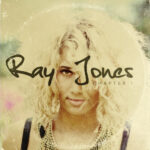
  • Ray Jones Billy J. Kramer and The Dakotas · bass b. 1939 87 YRS
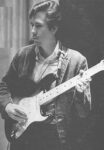
  • Bobby Fuller The Bobby Fuller Four · vocals, guitar, piano, drums b. 1942 d. 1966
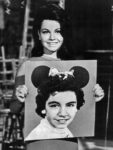
  • Annette Funicello b. 1942 d. 2013
  • Eddie Brigati The Rascals, The Young Rascals · percussion, vocals b. 1945 81 YRS
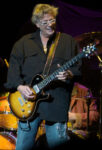
  • Leslie West Mountain · guitar, vocals b. 1945 d. 2020
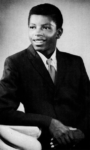
  • Carl Carlton b. 1952 d. 2025
  • 1961 Chubby Checker performed “The Twist” and “Let’s Twist Again” on Ed Sullivan, reviving interest that sent the original back to No. 1 the next January. It remains the only single to top the U.S. chart in two separate calendar years.
  • 1963 Kenny Rogers, 24, married his third wife, Margo Gladys Anderson. They had a son, Kenneth Jr., and divorced in 1975; Rogers later married Marianne Gordon and Wanda Miller.
  • 1964 EMI executive John Burgess urged the High Numbers to develop original material instead of relying on audition covers. Pete Townshend began writing, the band reclaimed the Who name, and producer Shel Talmy recorded their breakthrough “I Can’t Explain.”
  • 1965 The Kingston Trio appeared on NBC’s World War II drama Convoy in the episode “The Duel,” an unusual acting detour during the folk revival.
  • 1965 The Rolling Stones released “Get Off of My Cloud” in Britain after “Satisfaction.” It topped charts in Britain, America, Canada, South Africa, and Germany, though Keith Richards later said the follow-up had been rushed.
  • 1966 The Beach Boys’ “Good Vibrations” entered the U.S. chart after six months, seventeen sessions, four studios, and more than $16,000 of work. It reached No. 1 in December and received a Grammy nomination, losing to “Winchester Cathedral.”
  • 1966 Cashbox named ? and the Mysterians’ “96 Tears” America’s best seller; it topped Billboard the next week and later ranked No. 210 on Rolling Stone’s original 500 greatest songs list.
  • 1966 Supremes A’ Go-Go displaced Revolver at No. 1, making the Supremes the first female group to top America’s album chart.
  • 1966 The Pozo-Seco Singers’ “I Can Make It with You” peaked at No. 32, a position repeated by “Look What You’ve Done” the next year. After the group’s 1970 breakup, Don Williams achieved seventeen country No. 1s and entered the Country Music Hall of Fame.
  • 1967 One day after reaching No. 1, Lulu performed “To Sir with Love” on The Ed Sullivan Show alongside Eddie Fisher, the McGuire Sisters, and Stiller and Meara.
  • 1969 Paul McCartney addressed the “Paul is dead” hoax at his Scottish home, declaring himself fit and very much alive. The rumor had surged after Abbey Road’s barefoot cover image and a satirical Michigan Daily review that invented many supposed clues.
  • 1969 Singer Tommy Edwards died from cirrhosis at 47. His million-selling 1958 “It’s All in the Game” made him the first Black artist to top the Hot 100, among fifteen chart entries from 1951 to 1960.
See more Full page
  • Fred Marsden Gerry and The Pacemakers · drums b. 1940 d. 2006
  • BA Barbara Ann Hawkins b. 1943 83 YRS
  • Greg Ridley Humble Pie · bass guitar, guitar b. 1947 d. 2003
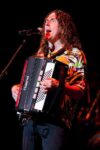
  • Weird” Al Yankovic accordion, keyboards b. 1959 67 YRS
  • 1954 Elvis Presley’s “Blue Moon of Kentucky” reached No. 6 in Nashville and No. 3 in New Orleans, becoming his first hit beyond Memphis. Elvis and his band had transformed Bill Monroe’s slow bluegrass waltz into an energetic 4/4 rockabilly performance.
  • 1961 Dion’s “Runaround Sue” reached No. 1 in America and later No. 11 in Britain. Despite the title, the song was not written about his wife, Susan.
  • 1964 J. Frank Wilson was seriously injured and his manager, Sonley Roush, was killed when their car collided head-on near Lima, Ohio. Their tragedy ballad “Last Kiss” was already in the Top 10 on its way to No. 2.
  • 1965 The Temptations’ “My Baby” became their seventh Hot 100 entry, eventually reaching No. 13 on the pop chart and No. 4 on Billboard’s R&B list.
  • 1966 The Jimi Hendrix Experience recorded “Hey Joe” at De Lane Lea Studios in London. Their British debut single reached No. 6, though its 1967 American release failed to chart.
  • 1968 MGM released Elvis Presley’s Live a Little, Love a Little, co-starring Rudy Vallee. Its soundtrack included “A Little Less Conversation,” whose remix returned in 2002 to reach No. 1 in Britain and No. 50 in America.
  • 1975 Elton John received a Hollywood Walk of Fame star at 6901 Hollywood Boulevard, arriving in a gold golf cart for the ceremony near the Chinese Theatre.
  • 1976 Chicago’s “If You Leave Me Now” topped both the U.S. and UK charts and became the group’s biggest international seller. It earned Chicago its first Grammy, for Best Pop Vocal Performance by a Duo, Group or Chorus, and a Record of the Year nomination.
  • 1976 Led Zeppelin made its U.S. television debut on Don Kirshner’s Rock Concert through film clips of “Black Dog” and “Dazed and Confused” from The Song Remains the Same. By then the band already had seven Top 10 albums, five of them No. 1.
  • 1978 Sid Vicious attempted suicide by cutting his wrist at New York’s Hotel Seville while free on bail in Nancy Spungen’s murder case. He died the following February from an accidental heroin overdose.
  • 1980 Mark David Chapman left his security job in Honolulu and reportedly signed out using the name “John Lennon.” He murdered Lennon outside the Dakota on December 8.
  • 1988 Michael Jackson visited Detroit’s Motown Museum and donated a fedora, glove, a 1972 costume, and a then-record $125,000 contribution, while praising label founder Berry Gordy.
See more Full page
  • J P Richardson b. 1930 d. 1959
  • Bill Wyman Bill Wyman’s Rhythm Kings, The Rolling Stones · bass guitar, guitar b. 1936 90 YRS
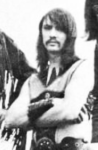
  • SA Santo Farina Santo and Johnny b. 1937 89 YRS
  • TE Ted Templeman Harper's Bizarre b. 1944 82 YRS
  • Jerry Edmonton Steppenwolf · drums, vocals b. 1946 d. 1993
  • Rob Van Leeuwen Shocking Blue b. 1946 80 YRS
  • 1955 Colonel Tom Parker asked Sun Records owner Sam Phillips what it would cost to release Elvis Presley from his contract. Phillips named a price of $40,000.
  • 1960 Neil Sedaka recorded “Calendar Girl” at RCA’s New York studio. The single later reached No. 4 in America and No. 8 in Britain.
  • 1960 Brenda Lee’s “I Want to Be Wanted” became her second Hot 100 No. 1 and fourth U.S. Top 10 hit of the year; it also reached No. 31 in Britain.
  • 1960 Frank Sinatra’s Nice ’n’ Easy began nine weeks atop Billboard’s stereo album chart. It received an Album of the Year Grammy nomination but lost to Bob Newhart’s comedy LP The Button-Down Mind of Bob Newhart.
  • 1962 James Brown financed a $5,700 recording of his Apollo Theater performance after his label resisted the idea. Live at the Apollo sold a million copies, preserved the show without breaks between tracks, and later ranked No. 24 on Rolling Stone’s 2003 greatest-albums list.
  • 1963 Bob Dylan recorded “The Times They Are a-Changin’” at Columbia’s New York studio. It was not issued as an American single but reached No. 9 in Britain and later placed No. 59 on Rolling Stone’s 2004 greatest-songs list.
  • 1966 Newsweek examined whether the Monkees were a genuine band, quoting Davy Jones as saying they were an act rather than a rock group. Session musicians had played much of the instrumentation on the group’s early recordings.
  • 1970 Pink Floyd’s Atom Heart Mother became the band’s first UK No. 1 album. It reached No. 55 in America and was certified Gold there in 1994, although Roger Waters and David Gilmour later spoke dismissively of it.
  • 1970 Santana’s Abraxas became the group’s first U.S. No. 1 album, powered by “Oye Como Va,” which reached No. 13, and “Black Magic Woman,” which peaked at No. 4.
  • 1971 Don McLean released American Pie. The album later spent seven weeks at No. 1 and went double Platinum; its title song topped America and reached No. 2 in Britain, while “Vincent” reached No. 12 in America and No. 1 in Britain.
  • 1973 Art Garfunkel’s Angel Clare received Gold certification. The No. 5 album included “All I Know,” a No. 9 single, along with “I Shall Sing” and “Traveling Boy.”
  • 1973 John Lennon sued the U.S. government for records showing he had been placed under surveillance. Later Freedom of Information disclosures confirmed that the FBI had monitored him beginning in 1971.
See more Full page

Subscribe to our newsletter

Never miss an update on your favorite artists.

KEEP THE ROCK ROLLING

Sign Up for Exclusive Rock Content for free!

We don’t spam! Read our privacy policy for more info.

Almost there! Please check your inbox (and spam folder) to confirm your subscription and start receiving the latest rock updates!

Log In

Welcome back to Deadikace.

Create my free account

Create your free fan account — it takes a minute.

Reset your password

We will email you a link to set a new one.

Choose a new password

Nearly done — this replaces the old one.

Continue with Google Continue with Facebook

or

New to Deadikace?

Already have an account?

Enter your email and we will send you a reset link.

    Scroll to top
    • Join freeLog In
    • Home
    • News
    • Contact
    • Artists
    • Rock History
    • Features
      • Top Lists
      • Flashback
      • Guitar Zone
      • Videos & Memes
    • Community
    • Concerts
    Search