
Skip to content
Deadikace Logo Png
  • Join freeLog In
  • News
  • FeaturesExpand
    • Top Lists
    • Flashback
    • Guitar Zone
    • Videos & Memes
  • Artists
  • Rock History
  • Community
  • Concerts
Facebook YouTube TikTok Instagram
Deadikace Logo Png

george-tyson

2 followers 2 Following Log in to message
  • 46Artists
  • 17Bands
  • 0Albums
  • 2Reviews
AllPostsArtistsBandsAlbumsReviewsBackstageFollowersFollowing

Following 2

  • anthonyakl
  • yamizolan
Page 1
Facebook YouTube Instagram TikTok
  • Contact Us
  • ABOUT DEADIKACE
  • PRIVACY POLICY
  • TERMS AND CONDITIONS
  • EDITORIAL POLICY
  • CORRECTIONS POLICY
  • EDITORIAL CONTACT

Copyright © 2026 Deadikace

October 6 October 7 October 8

  • Millie Small b. 1946 d. 2020
  • Bobby Farrell Boney M · vocals b. 1949 d. 2010
  • Thomas McClary The Commodores · acoustic guitar, electric guitar, ukulele, vocals b. 1949 77 YRS
  • Kevin Cronin REO Speedwagon · guitar, piano b. 1951 75 YRS
  • 1958 Billboard warned that payola—record companies secretly rewarding disc jockeys for airplay—had become so widespread that industry executives could no longer measure its influence. The scandal soon destroyed the career of pioneering rock-and-roll broadcaster Alan Freed.
  • 1963 The Ed Sullivan Show featured Dick Dale performing “Surfin’ and a Swingin’” and the Angels singing “My Boyfriend’s Back.” The varied bill also included Kate Smith, Totie Fields, Stiller and Meara, and the Three Stooges performing their “Maharajah” routine.
  • 1964 The Beatles began recording “Eight Days a Week” at EMI Studios. Paul McCartney later traced the title to a chauffeur who described himself as working eight days a week; issued as an American single in February 1965, the song became the group’s seventh U.S. No. 1.
  • 1969 Apple released George Harrison’s “Something” as the A-side of a Beatles single, the first Harrison composition given that billing. Paired with “Come Together,” it topped the American chart, reached No. 4 in Britain, and made the Top 10 in eight other countries.
  • 1973 Cher led the U.S. singles chart with “Half-Breed,” written for her by Mary Dean, Al Capps, and Snuff Garrett. The record later received Gold certification for one million American sales.
  • 1976 Rick Dees and His Cast of Idiots received a Gold record for “Disco Duck,” which became only the fourth Platinum-certified single that December. WMPS fired Dees after he complained on air that the station would not play his near-No. 1 novelty hit, but a rival hired him and he went on to a Hall of Fame radio career.
  • 1977 Britt Ekland filed a $15 million palimony lawsuit against former partner Rod Stewart. The closely watched dispute never reached trial and ended with an out-of-court property settlement valued at roughly $500,000.
  • 1978 ABBA members Benny Andersson and Anni-Frid Lyngstad married privately in Lidingö, Sweden. The pressures surrounding the group’s extraordinary fame contributed to their separation and divorce three years later.
  • 1978 Atlantic Records chairman Ahmet Ertegun met Jesse Jackson in Chicago over a racially and sexually offensive lyric in the Rolling Stones’ “Some Girls.” Atlantic declined to alter later editions, while Mick Jagger defended the song as a satire of real-world stereotypes rather than an endorsement of them.
  • 1978 Johnny O’Keefe, widely regarded as Australia’s first great rock-and-roll star, died at 43 after an accidental prescription-drug overdose caused a heart attack. From 1959 to 1974 he accumulated 29 Australian Top 40 hits.
  • 1979 Robert John topped the Billboard Hot 100 with “Sad Eyes,” which also reached No. 31 in Britain. The breakthrough came nearly 21 years after his first chart appearance with the minor 1958 hit “White Bucks and Saddle Shoes.”
  • 1980 The Bee Gees sued manager Robert Stigwood for $136 million, alleging fraud and withheld royalties despite his role in their mid-1970s revival. Stigwood countersued for $310 million in defamation; both sides settled privately in May 1981 and exchanged public apologies.
See more Full page
  • Colin Cooper The Climax Blues Band b. 1939 d. 2008
  • Martin Murray The Honeycombs · guitar b. 1941 85 YRS
  • TO Tony Silvester The Main Ingredient · vocals b. 1941 85 YRS
  • Kevin Godley drums, keyboards b. 1945 81 YRS
  • David Hope Kansas · bass b. 1949 77 YRS
  • John Mellencamp guitar, percussion b. 1951 75 YRS

  • David Taylor Edison Lighthouse · bass b. 1959 67 YRS
  • 1938 Sixteen-year-old Judy Garland recorded “Over the Rainbow” on an MGM soundstage in Beverly Hills for The Wizard of Oz. It became her signature song and remained part of her live performances for the next three decades.
  • 1952 Bandstand began as a weekday program on Philadelphia’s WFIL-TV with Bob Horn as host. Dick Clark took over after Horn’s 1956 dismissal, guided the renamed American Bandstand onto national television, and eventually turned it into a Saturday institution central to rock-and-roll culture.
  • 1955 Houston police arrested Ella Fitzgerald, Dizzy Gillespie, and several others backstage at the Music Hall and fined them for gambling. Many believed the raid reflected resistance to newly integrated audiences rather than the stated offense; the musicians nevertheless returned in time to play the second set without the crowd learning what had happened.
  • 1957 RCA had already received 500,000 advance orders for Elvis’ Christmas Album a week before release, although only 200,000 copies had been pressed. Irving Berlin unsuccessfully campaigned against Presley’s blues-influenced “White Christmas”; the album still spent four weeks at No. 1, later sold more than 17 million U.S. copies, and became Presley’s first Diamond-certified LP.
  • 1957 Little Richard entered Billboard’s Top 40 with “Keep A-Knockin’,” driven by Grady Gaines’s forceful saxophone. The single reached No. 8 during a twelve-week run and marked Richard’s seventh pop-chart appearance in two years.
  • 1960 Elvis Presley recorded “Flaming Star” at Radio Recorders in Hollywood for the film of the same name. It reached No. 14 in May 1961 but appeared only on Britain’s Elvis by Request EP rather than as a standalone single.
  • 1963 Capitol released the Beach Boys’ fourth album, Little Deuce Coupe. Featuring a 1932 Ford supplied by Hot Rod magazine on its cover, the LP peaked at No. 4 during 46 weeks on Billboard’s chart and later went Platinum.
  • 1964 The Beatles appeared from London on a taped edition of the American television show Shindig!, performing “I’m a Loser,” “Boys,” and “Kansas City.”
  • 1964 Police stopped soul singer Joe Tex in Baton Rouge and cited him for watching a television mounted in the dashboard of his new Cadillac while driving. The new safety ordinance made him only the second American motorist formally charged with that particular distracted-driving offense.
  • 1967 Scotland Yard arrested Cass Elliot in London over alleged theft of expensive hotel linens. The accusation was quickly dropped, and later accounts indicated that authorities had used it as a pretext to question her about an associate suspected of drug trafficking.
  • 1967 Promoter Sid Bernstein offered the Beatles an unprecedented $1 million to return to Shea Stadium. The group rejected the proposal, choosing to remain focused on studio work after ending live touring the previous year.
  • 1967 The Association’s “Never My Love” peaked at No. 2 on the Hot 100. By the end of 1999, BMI counted more than seven million radio performances, making it the century’s second-most-played song behind the Righteous Brothers’ “You’ve Lost That Lovin’ Feelin’.”
See more Full page
  • DO Doc Green The Drifters · vocals b. 1934 d. 1989
  • Fred Cash The Impressions · vocals b. 1940 86 YRS
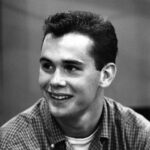
  • GE George Bellamy The Tornados · guitar b. 1941 85 YRS
  • Buzz Clifford b. 1942 d. 2018
  • BU Butch Rillera Redbone · drums b. 1945 81 YRS
  • JO Johnny Ramone (John William Cummings) The Ramones · guitar b. 1948 78 YRS
  • Hamish Stuart The Average White Band · bass, guitar b. 1949 77 YRS
  • RO Robert ‘Kool’ Bell Kool & the Gang b. 1950 76 YRS
  • 1955 The Four Aces topped Cashbox with “Love Is a Many-Splendored Thing,” the first American No. 1 written specifically for a motion picture. It reached No. 2 in Britain and won the 1956 Academy Award for Best Original Song.
  • 1957 Jerry Lee Lewis recorded “Great Balls of Fire” at Sun Studio in Memphis as the follow-up to “Whole Lotta Shakin’ Goin’ On.” Released a month later, it sold more than a million copies in ten days and eventually six million, reaching No. 2 behind “At the Hop” in January 1958.
  • 1962 Little Richard ended a five-year withdrawal from secular music by opening his first British tour in Doncaster alongside Sam Cooke and Gene Vincent. He initially planned a gospel-only set but, inspired by the audience response to Cooke, returned explosively to rock and roll with “Long Tall Sally.”
  • 1966 Cream drummer Ginger Baker collapsed from exhaustion at Sussex University after his demanding solo in “Toad.” He recovered in a local hospital and soon resumed touring.
  • 1966 British rocker Johnny Kidd died in a Lancashire car crash at 30. Though he never charted in America, his UK hits and authorship of “Shakin’ All Over”—the Guess Who’s 1965 chart debut—secured his transatlantic influence.
  • 1968 Cass Elliot opened a planned fourteen-day, $40,000-a-week solo engagement at Caesars Palace, but severe tonsillitis and an under-rehearsed band produced a disastrous first night. The casino canceled the run immediately, and Newsweek compared the performance to an ocean liner sinking on its maiden voyage.
  • 1974 Dionne Warwick returned to the U.S. Top 10 with the Spinners collaboration “Then Came You.” During this period she added an “e” to Warwick for astrological luck before later restoring the familiar spelling, itself a variation of her actual surname Warrick.
  • 1976 Stevie Wonder’s Songs in the Key of Life debuted at No. 1 on Billboard’s album chart, only the third LP to do so. His first release after a $13 million Motown agreement, the three-record set went Platinum and produced “Sir Duke,” “I Wish,” and “Isn’t She Lovely.”
  • 1977 Billy Joel’s breakthrough LP The Stranger entered Billboard’s album chart and eventually reached the Top 10. It yielded four American Top 30 singles and became his first UK-charting album, peaking there at No. 24.
  • 1977 Actor and singer David Soul earned his second UK No. 1 of the year with “Silver Lady.” His earlier chart-topper “Don’t Give Up on Us” had also reached No. 1 in America that April.
  • 1977 Debby Boone’s “You Light Up My Life” began eight weeks atop Cashbox and ultimately led Billboard for ten, making it one of the decade’s dominant singles. Britain was less receptive, where it stopped at No. 48.
  • 1977 Stephen Bishop’s “On and On” reached its No. 11 Hot 100 peak during a 28-week stay. It rose to No. 6 in Canada but did not become a UK hit.
See more Full page

Subscribe to our newsletter

Never miss an update on your favorite artists.

KEEP THE ROCK ROLLING

Sign Up for Exclusive Rock Content for free!

We don’t spam! Read our privacy policy for more info.

Almost there! Please check your inbox (and spam folder) to confirm your subscription and start receiving the latest rock updates!

Log In

Welcome back to Deadikace.

Create my free account

Create your free fan account — it takes a minute.

Reset your password

We will email you a link to set a new one.

Choose a new password

Nearly done — this replaces the old one.

Continue with Google Continue with Facebook

or

New to Deadikace?

Already have an account?

Enter your email and we will send you a reset link.

    Scroll to top
    • Join freeLog In
    • Home
    • News
    • Contact
    • Artists
    • Rock History
    • Features
      • Top Lists
      • Flashback
      • Guitar Zone
      • Videos & Memes
    • Community
    • Concerts
    Search