
ZZ Top Drummer Frank Beard Dies At 77
Frank Beard, the drummer whose deep Texas shuffle and rock-solid backbeat helped define ZZ Top for more than five decades, has died at the age of 77.
Beard died while receiving hospice care at his ranch in Richmond, Texas, with members of his family at his side, according to his publicist Bob Merlis. His death was announced on August 18. No cause of death has been publicly disclosed.
For most people, the face of ZZ Top was Billy Gibbons and Dusty Hill: the matching beards, sunglasses, guitars, hot rods and unmistakable image that eventually became as recognizable as the band’s music.
Frank Beard sat behind them.
And that was exactly where one of ZZ Top’s greatest strengths was hiding.
Beard was never a drummer who seemed interested in overpowering a song. He didn’t need theatrical drum solos or constant fills to make his presence felt. His contribution was subtler and, in many ways, harder to replace: he made ZZ Top groove.
Billy Gibbons summed it up after his death, calling Beard one of the most naturally innovative drummers he had known and saying that his signature backbeat had been essential to ZZ Top’s sound.
For anyone who has really listened to the band’s records rather than simply heard the hits on the radio, it is difficult to disagree.
From the Texas blues circuit to ZZ Top
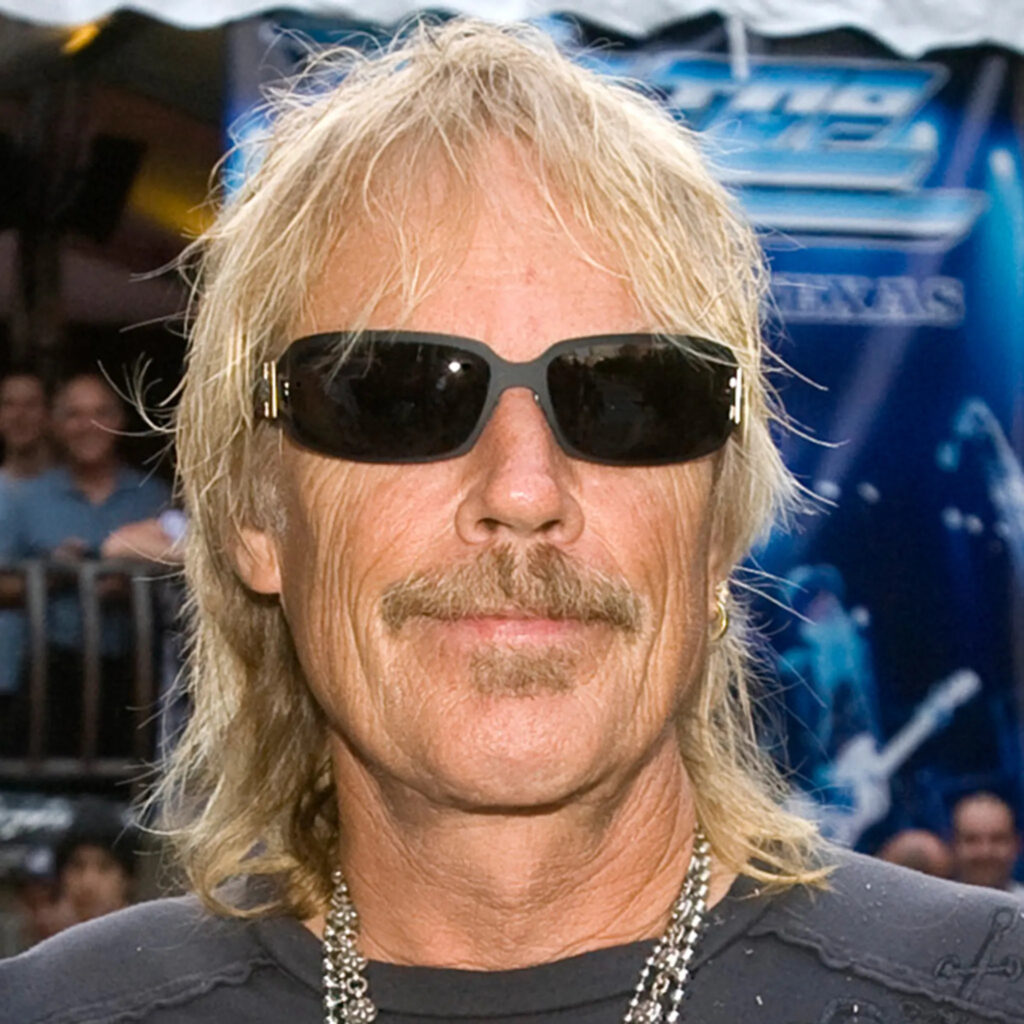
Frank Lee Beard was born in Texas on June 11, 1949.
His musical partnership with Dusty Hill began years before ZZ Top. The two played together in American Blues, one of several bands in the Dallas-area scene that helped shape the musicians they would later become.
Beard joined Billy Gibbons in the formative version of ZZ Top in 1969 and subsequently recommended Hill for the bass position.
That completed one of the most durable lineups in rock history.
Gibbons, Hill and Beard would remain together for more than half a century.
That longevity is remarkable by itself.
Rock history is full of bands destroyed by ego, money, addiction, musical disagreements or simply the strain of spending decades working together. ZZ Top somehow maintained the same three-man lineup from the end of the 1960s until Hill’s death in 2021.
Their debut, ZZ Top’s First Album, arrived in 1971, but it was Tres Hombres in 1973 that established the band as a major force.
The album contained “La Grange” and captured the formula ZZ Top would spend decades refining: blues, boogie and rock stripped down to their essentials and delivered with distinctly Texan attitude.
They weren’t trying to reinvent the blues.
They were making it unmistakably their own.
The man underneath the riffs
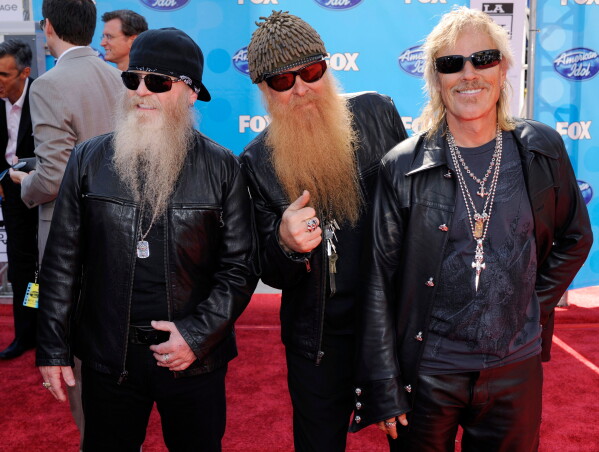
Billy Gibbons is rightly celebrated as one of rock’s great guitar stylists.
His tone is immediately recognizable, his phrasing is economical, and few guitarists have been better at taking a basic blues idea and turning it into a riff capable of carrying an entire song.
But those riffs needed somewhere to sit.
Frank Beard and Dusty Hill gave them that space.
Listen to “La Grange.”
The first thing most listeners notice is Gibbons’ hypnotic guitar figure, rooted in the boogie tradition of John Lee Hooker. But underneath it is Beard, driving the song with a loose, swinging pulse that never feels rushed and never becomes rigid.
That distinction is crucial.
ZZ Top could be extremely heavy, but at their best they never sounded stiff. There was always blues underneath the rock, and Beard’s drumming was a major reason why.
You can hear it across the classic catalog: “La Grange,” “Tush,” “Waitin’ for the Bus,” “Jesus Just Left Chicago,” “Cheap Sunglasses,” “I’m Bad, I’m Nationwide,” “Beer Drinkers & Hell Raisers” and many more.
He understood something that great rhythm-section players understand instinctively: sometimes the most important thing you can play is exactly enough.
A drummer playing relatively simple patterns has nowhere to hide. Every kick, snare and hi-hat placement matters. The feel between those notes matters even more. Beard had that feel.
He could shuffle without sounding lazy, hit hard without making the band feel heavy-footed and leave enough space for Gibbons’ guitar to breathe.
That’s the sort of musicianship that can be overlooked precisely because it sounds effortless.
More than just a blues-rock drummer
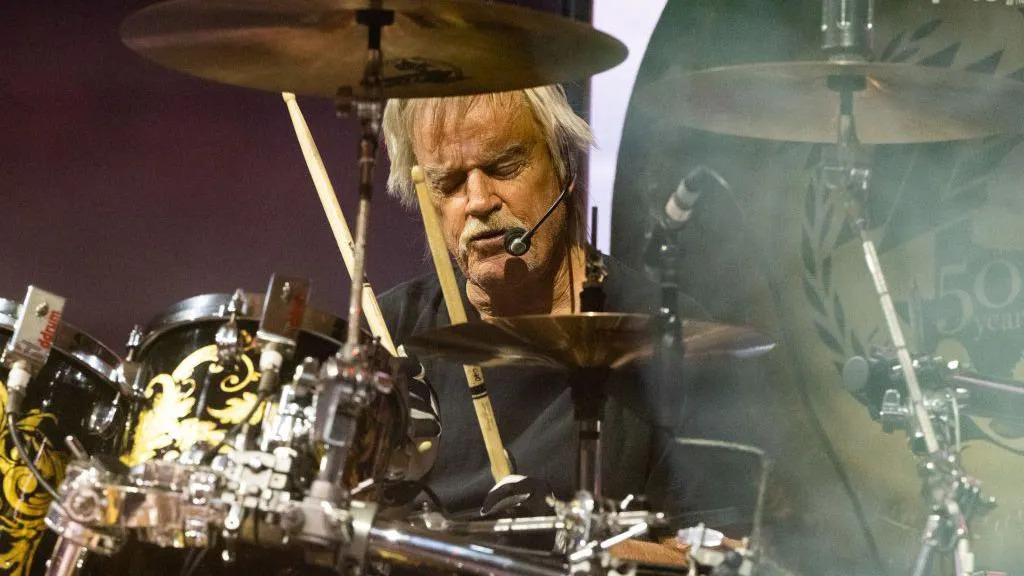
It is tempting to reduce Beard’s style to the famous Texas shuffle, but that undersells him.
ZZ Top’s catalog changed considerably over the decades, and Beard’s role changed with it.
The early records are earthy, raw and deeply indebted to blues. By the late 1970s and early 1980s, the band’s production was becoming tighter and more polished.
Then came Eliminator.
Released in 1983, the album turned ZZ Top from a hugely successful rock band into genuine pop-culture icons.
“Gimme All Your Lovin’,” “Sharp Dressed Man” and “Legs” were everywhere. MTV embraced the videos, and suddenly a Texas blues trio that had already been around for well over a decade was reaching an entirely new generation.
The sound had changed too.
Synthesizers, sequencers and electronic rhythm programming became a major part of the band’s studio approach during this era, particularly on Eliminator. The record’s unusually precise, almost machine-like pulse was very different from the loose blues feel of the band’s early albums.
That part of ZZ Top’s history is worth acknowledging because it makes Beard’s career more interesting, not less.
The band was willing to transform.
Beard came from a world of blues shuffles and live rhythm sections, yet he remained part of ZZ Top as its music absorbed electronic production and the aesthetics of the MTV era.
And onstage, those songs still had to become rock songs again.
That required a drummer.
The only Beard who didn’t need the beard
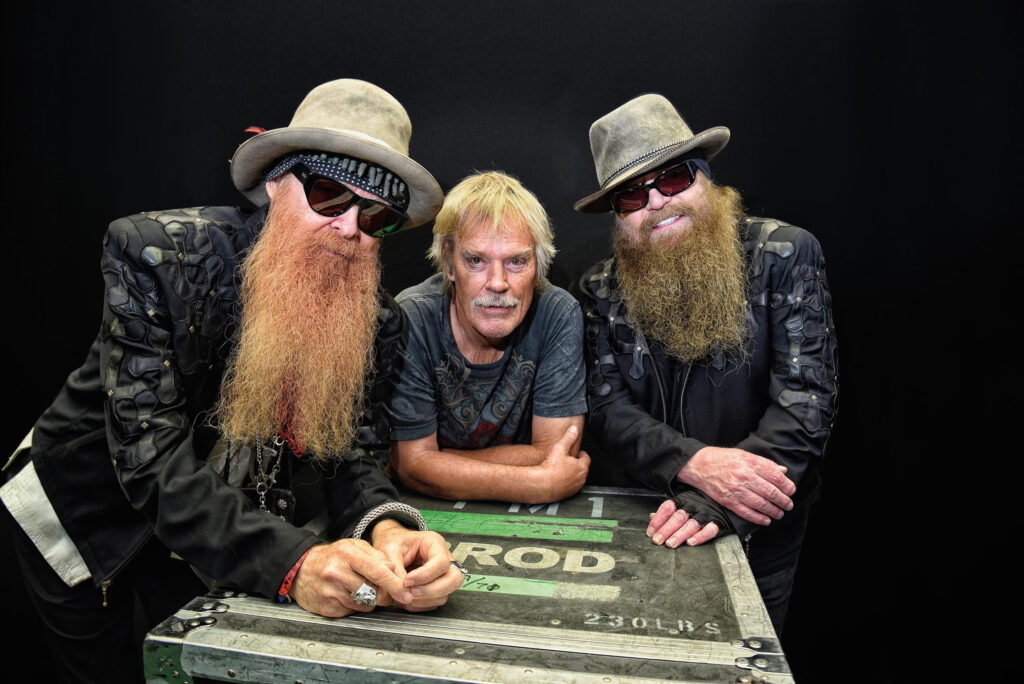
There is one piece of ZZ Top trivia that will probably follow Frank Beard forever.
The member whose surname was literally Beard was the one who did not sport the enormous beard that became the band’s visual trademark.
It suited ZZ Top’s sense of humor perfectly.
Gibbons and Hill eventually became almost mythical-looking figures: matching facial hair, sunglasses, hats and choreographed movements at the front of the stage.
Beard remained behind the kit, usually looking comparatively understated.
In a strange way, the image reflected the music.
The two men at the front attracted the attention.
Beard kept everything moving.
Success, excess and survival
Beard’s career also included the darker side of 1970s rock success.
During the band’s rise, he developed serious problems with drugs and later spoke openly about his addiction and recovery.
After ZZ Top’s enormous mid-1970s touring schedule, the band took an extended break. Beard used part of that period to enter rehabilitation and eventually became sober.
It is an important part of his story because there is a tendency to romanticize self-destruction when discussing musicians from that era.
Beard survived it.
And then he went back to work.
ZZ Top returned, changed its sound, became even bigger and kept going.
By the 1980s, they were no longer simply a successful blues-rock band from Texas. They were one of the most recognizable bands in the world.
The group ultimately sold more than 50 million records, scored six No. 1 singles on Billboard’s Mainstream Rock Airplay chart and received multiple Grammy nominations.
In 2004, ZZ Top was inducted into the Rock & Roll Hall of Fame.
By then, Beard had already spent more than three decades behind the kit.
He still had many years left.
Losing Dusty changed everything
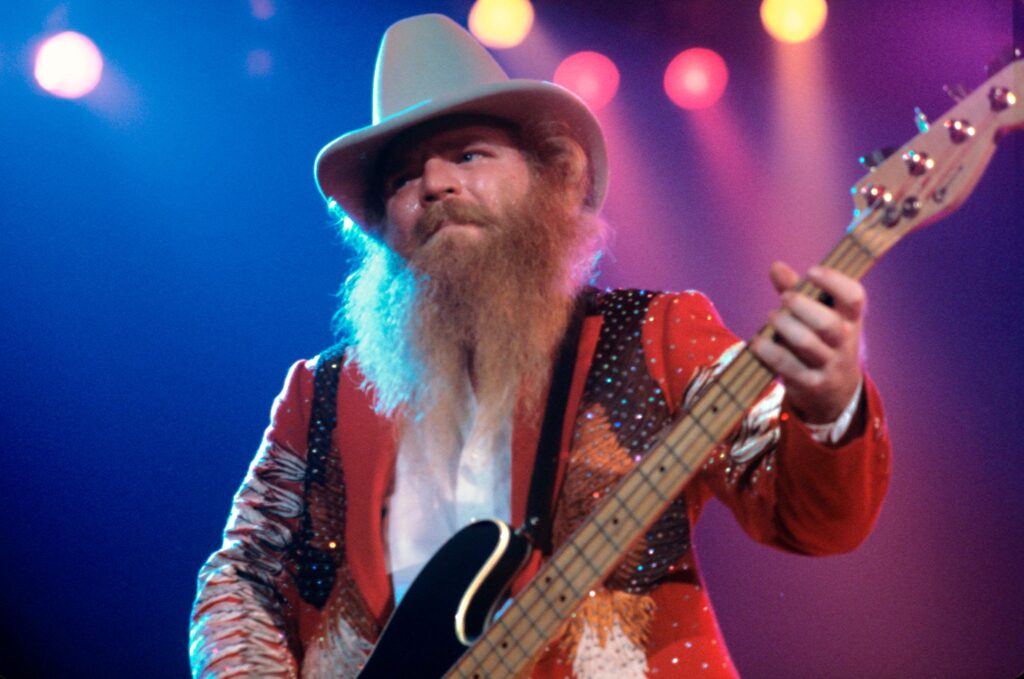
The defining ZZ Top trio finally came to an end when Dusty Hill died in 2021 at the age of 72.
Before his death, Hill had indicated that the band should continue with longtime guitar technician Elwood Francis playing bass.
Gibbons and Beard honored that wish.
For fans who had spent decades seeing the same three musicians onstage, it was inevitably strange. Part of the magic of ZZ Top had always been the sense that these three men were inseparable from the band’s identity.
But continuing also made sense.
ZZ Top had always been a working band.
They toured relentlessly. They played their songs. They kept moving.
Beard continued as long as his health allowed.
His final years on the road
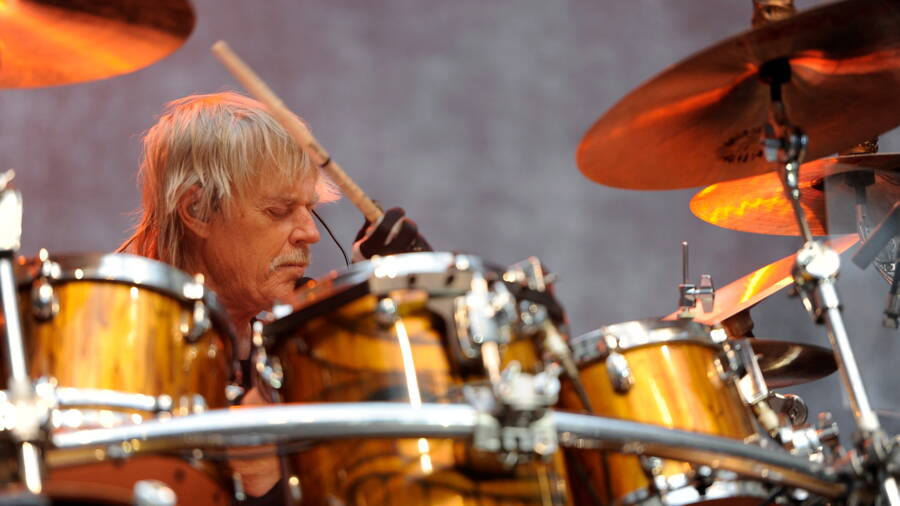
Health issues increasingly affected Beard’s ability to tour toward the end of his life.
In 2025, he stepped away from performances while dealing with foot and ankle problems, with another drummer filling in during his absence.
His health continued to cause difficulties in 2026, and ZZ Top canceled an August appearance at the Hollywood Bowl shortly before his death.
By then, Beard was receiving hospice care. After his death, Gibbons made clear that ZZ Top intends to continue.
According to Gibbons, that is what Beard wanted.
“The band of which he was part for six decades is going to keep on keeping on as he had wished,” he said in the statement announcing his bandmate’s death.
There is something very ZZ Top about that.
No dramatic farewell tour. No attempt to turn the end into a spectacle. Just keep playing.
The groove that defined ZZ Top
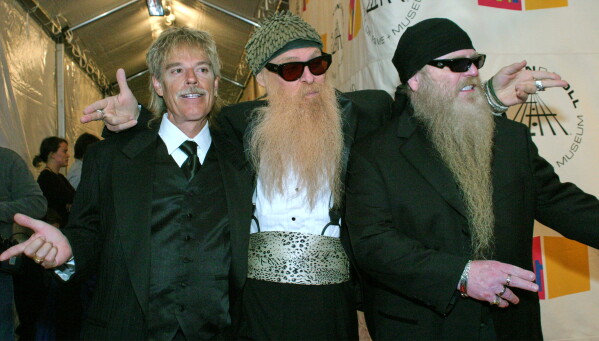
Frank Beard was never the kind of drummer who needed to dominate a song.
His strength was feel.
Listen closely to “La Grange,” “Tush” or “Cheap Sunglasses” and you hear how much space he leaves around Billy Gibbons’ guitar. The snare lands exactly where it needs to. The rhythm swings without losing its weight. Everything feels simple because Beard made it sound simple.
That was his gift.
Great groove players are often easiest to appreciate when you deliberately stop listening to the obvious part of the song. Take away the riffs for a moment and focus on what Beard and Dusty Hill were doing underneath them. That rhythm section was a huge part of why ZZ Top sounded like ZZ Top.
With Hill gone since 2021 and Beard now gone too, Billy Gibbons is the last surviving member of the classic trio.
But the records still carry that unmistakable pulse.
Put on Tres Hombres, turn up “La Grange” and listen beyond the riff.
Frank Beard is right there.
Frank Beard: 1949–2026.
Rest in peace.
Latest Posts
 Deep Purple Drop Heavy New Title Track Video From 2026 Album ‘SPLAT!’
 Sharon Osbourne Kept Black Sabbath in the Dark About Ozzy’s Fatal Health Risks
 Tony Iommi Keeps the Black Sabbath Flame Burning on New Project From The Dark
 Earl Slick Recalls David Bowie Trying to Play Through Onstage Heart Attack
 Iron Maiden’s Nicko McBrain Turned Down Golf With Donald Trump
 Bon Jovi Extend Forever Tour With 2027 Hyde Park and Stadium Dates