
Don Henley Reflects on the Making of the Eagles’ Hotel California
Nearly 50 years after its release, Don Henley is looking back on Hotel California, the Eagles album that became both the defining statement of their career and one of the most successful records in music history.
Released on December 8, 1976, Hotel California has sold more than 32 million copies worldwide and remains one of the best-selling albums ever made. But according to Henley, the record’s lasting appeal goes beyond its commercial success. It captured the dreams, illusions, and excesses of an era while reflecting the band’s own experiences navigating fame and fortune.
“The desert is where mirage and myth are created, and so is Hollywood,” Henley told Guitar World in a 2026 interview marking the album’s 50th anniversary. Those ideas became the foundation of an album that explored the darker side of the American Dream through songs such as “New Kid in Town,” “Life in the Fast Lane,” “Victim of Love,” “The Last Resort,” and the iconic title track.
From Laurel Canyon Dreamers to Rock Superstars

The story of Hotel California began years before the album was recorded. In the late 1960s and early 1970s, aspiring musicians from across America flocked to Los Angeles in search of success. Among them were Don Henley and Glenn Frey, who would eventually become the creative core of the Eagles.
The pair first crossed paths within the vibrant Laurel Canyon music scene and quickly formed a close friendship. They spent countless hours driving around Los Angeles in Frey’s beloved 1955 Chevy, discussing songs, ambitions, and their plans for building a successful band.
At the time, neither musician had found major success. Henley had performed with the band Shiloh, while Frey was part of Longbranch Pennywhistle alongside songwriter J.D. Souther. Their fortunes changed when they joined Linda Ronstadt’s backing band, where they were joined by Randy Meisner and Bernie Leadon.
The chemistry was undeniable. Within months, the four musicians had formed the Eagles and signed with David Geffen’s Asylum Records.
The band’s first albums, Eagles and Desperado, established them as leaders of the growing country-rock movement. Hits such as “Take It Easy” and “Peaceful Easy Feeling” quickly made them stars. Yet Henley and Frey wanted more than country-rock success. As they began opening for arena acts like Yes and Jethro Tull, they realized they needed a bigger, more powerful sound to compete on the largest stages.
According to Henley, those experiences helped toughen the band and encouraged them to expand beyond their original musical roots.
Building the Sound of Hotel California

A major turning point came when producer Bill Szymczyk joined the Eagles. Unlike previous producer Glyn Johns, Szymczyk embraced the group’s growing interest in rock music and encouraged them to follow their instincts.
The transformation accelerated further when guitarist Joe Walsh joined the band in 1975, replacing Bernie Leadon. Already respected for his work with the James Gang and as a solo artist, Walsh brought a harder edge to the Eagles’ music and quickly developed a powerful musical partnership with guitarist Don Felder.
“Things got louder,” Henley recalled. “Joe, being a bona fide rock’n’roll guitar slinger, was the perfect foil for Don Felder.”
By the time recording sessions for Hotel California began in 1976, the Eagles were determined to create their most ambitious album yet. The band balanced extensive touring with recording sessions in Los Angeles and Miami, often working on songs in fragments before assembling them into finished compositions.
The album’s themes reflected both personal experiences and broader cultural changes. The optimism of the 1960s had faded, replaced by growing cynicism, political scandals, and a culture increasingly obsessed with wealth and celebrity. Those ideas found their way into the album’s lyrics, giving the record a depth that set it apart from many of its contemporaries.
Henley later described the project as the Eagles’ creative peak, combining strong songwriting with a more sophisticated and adventurous musical approach.
The Story Behind the Title Track
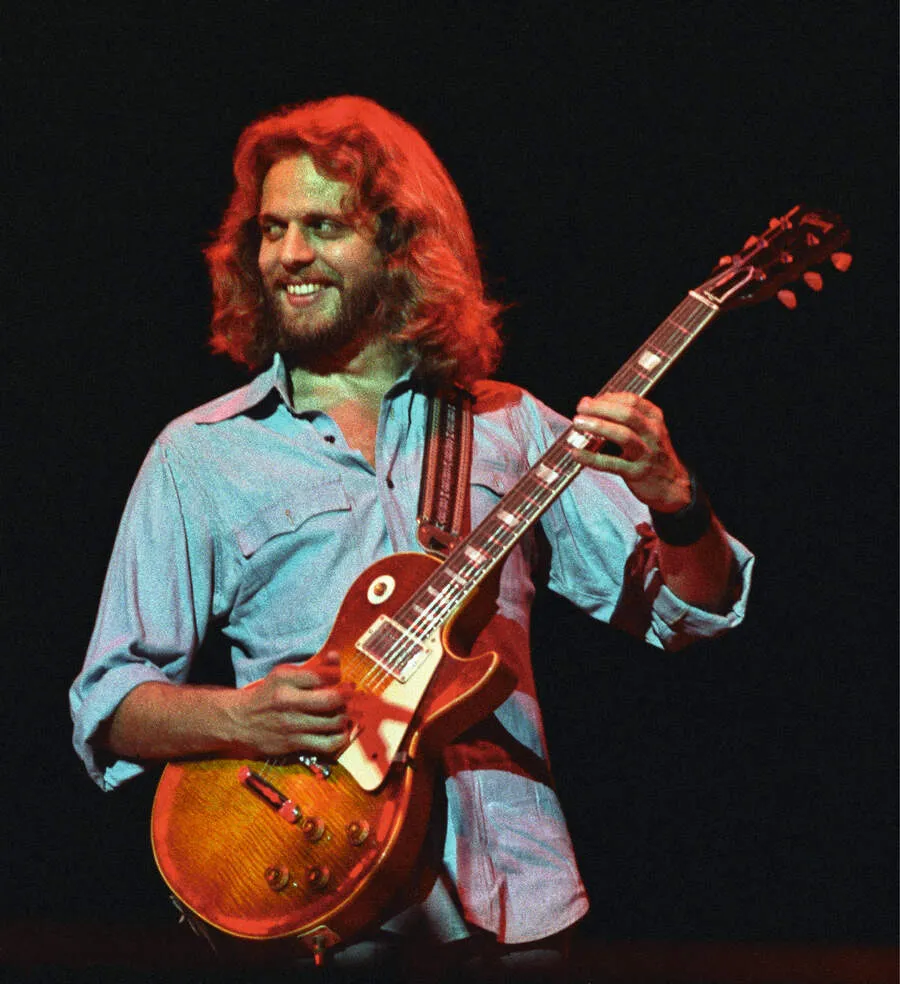
The creation of “Hotel California” has become one of the most famous stories in rock history.
The song began when Don Felder recorded a demo featuring a Spanish-flavored chord progression. The rough instrumental, which the band jokingly referred to as “Mexican Reggae,” immediately caught the attention of Henley and Frey.
Inspired by the music, the pair began developing lyrics and melodies that would transform the demo into something far more ambitious. Rather than telling a straightforward story, the song became a metaphor for the seductive nature of success, fame, and excess.
Henley has explained that the “hotel” represented a state of mind as much as a physical location. The song drew inspiration from Southern California culture while exploring themes of illusion, temptation, and the realization that dreams do not always deliver what they promise.
Recording the track proved challenging. Several versions were attempted before the band finally settled on the arrangement and key that would appear on the album.
One of the song’s defining moments came at the end, when Walsh and Felder engaged in the now-legendary dual guitar solo. Producer Bill Szymczyk recalled spending days perfecting the section, with the two guitarists effectively challenging each other note for note.
Walsh later described the process as friendly competition. Each guitarist pushed the other to deliver something better, resulting in one of the most celebrated guitar performances in rock music.
The band’s refusal to shorten the song for radio also proved crucial. Despite concerns about its six-and-a-half-minute running time, the Eagles insisted on releasing it intact. The decision paid off as “Hotel California” became one of the defining songs of the 1970s and remains a staple of classic rock radio nearly five decades later.
Success, Pressure, and an Enduring Legacy
When Hotel California arrived in December 1976, it was an immediate success. The album topped the Billboard charts, produced multiple hit singles, and received widespread critical acclaim.
Yet the enormous success came with a price.
As the Eagles grew bigger, internal tensions intensified. Constant touring, creative rivalries, and substance abuse created fractures within the group. The pressure to maintain their position at the top of the music world became increasingly difficult to manage.
Looking back, Glenn Frey offered perhaps the most memorable summary of the band’s experience: “We made it, and it ate us.”
Within a few years, the Eagles had fallen apart, bringing an end to one of the most successful runs in rock history. Although the band eventually reunited, Hotel California remains the moment when everything came together artistically before the pressures of success began pulling them apart.
Today, the album continues to attract new generations of listeners. Songs like “Hotel California,” “New Kid in Town,” and “Life in the Fast Lane” remain staples of classic rock playlists, while the record’s themes of ambition, illusion, and excess still resonate in modern culture.
For Henley, that enduring relevance is part of what makes the album special. Nearly 50 years later, Hotel California stands not only as the Eagles’ greatest achievement but also as one of rock music’s most enduring portraits of the American Dream—and the hidden costs that often come with it.
The Song’s Most Persistent Myth
No song from the album has generated more misreading than the title track itself. For decades, a persistent urban legend has linked “Hotel California” to Anton LaVey’s Church of Satan, built around the coincidence that LaVey founded the church in a San Francisco building in 1966 and published The Satanic Bible in 1969 — the same year referenced in the lyric “we haven’t had that spirit here since 1969.” Some versions of the legend claim the song reveals hidden meaning when played backwards.
Henley and his co-writers have addressed it directly, repeatedly, for as long as the rumor has circulated. Henley has described the song instead as a metaphor for “the dark underbelly of the American dream” and the “spiritual emptiness” of the music industry’s excesses — not an occult reference at all. Don Felder, who wrote the song’s music, has been equally direct that the lyric is about the uglier side of the Los Angeles music business, not Satanism. The myth persists anyway, which says less about the song than about how willing listeners are to hear hidden messages in a lyric that was, by its authors’ own repeated account, about something more mundane: fame curdling into something worse.
By the Numbers
The title track won the Grammy for Record of the Year at the 20th Annual Grammy Awards in 1978. The album itself has been certified 28× Platinum by the RIAA in the US alone, with worldwide sales estimated above 42 million copies — figures that put it among a small handful of albums from any era, in any genre, to reach that scale.
Sources & Further Reading
- Wide Open Country — The Hotel California Satanism Legend, Explained
- Wikipedia — Hotel California (album), certifications and Grammy record
- Guitar World — “The Making of the Eagles’ 1976 Masterpiece Hotel California”
Related Deadikace coverage: The Best Eagles Solo Albums You May Have Missed
Latest Posts
 Deep Purple Drop Heavy New Title Track Video From 2026 Album ‘SPLAT!’
 Sharon Osbourne Kept Black Sabbath in the Dark About Ozzy’s Fatal Health Risks
 Tony Iommi Keeps the Black Sabbath Flame Burning on New Project From The Dark
 Earl Slick Recalls David Bowie Trying to Play Through Onstage Heart Attack
 Iron Maiden’s Nicko McBrain Turned Down Golf With Donald Trump
 Bon Jovi Extend Forever Tour With 2027 Hyde Park and Stadium Dates