
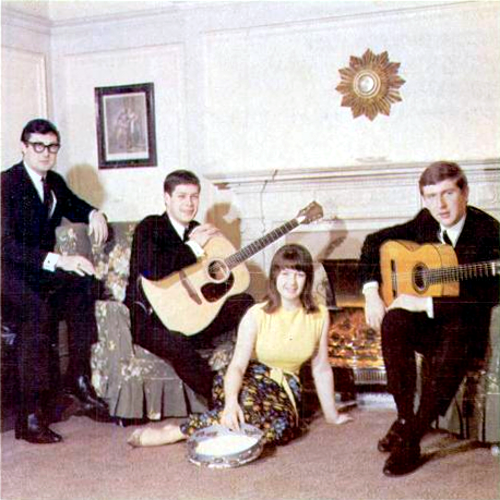
ARTIST PROFILE b. 1940
Athol Guy
Double bass, vocals with The Seekers.
Folk Gospel Pop
Not rated0 Fans
Athol George Guy AO (born 5 January 1940) is an Australian musician and former politician who was a member of the Australian folk-pop music group the Seekers, for whom he played double bass and sang. He is recognisable by his black-framed "Buddy Holly" style glasses and, during live performances, often acted as the group's compère.
Athol George Guy was born on 5 January 1940 in Colac, Victoria, the son of George Francis Guy (RAN) and Doris Thelma (née Cole) Guy. Guy's father served in the navy, and Guy states he rarely saw him. Guy was educated at Gardenvale Central School, where he was school captain. He entered Melbourne High School, where he was twice under age athletic champion and an officer in the cadet corps. During this time he was Victorian Sub Junior High Jump Champion and then silver medallist to Olympian Colin Ridgway the next year.
Guy formed his first musical group in 1958, the Ramblers, resulting in his move into performance, marketing and production at GTV9. Progressing via HSV7, media manager with the Clemenger Group and account exec with J. Walter Thompson, he then set sail with the folk-pop and gospel group the Seekers for 10 weeks' holiday abroad. The group was composed of him, Bruce Woodley, Keith Potger, and trad-jazz singer Judith Durham. On his return he established his own consulting company and compèred two national TV shows.
The Seekers would have many hits during the 1960s including "I'll Never Find Another You", "A World of Our Own", "The Carnival Is Over" and "Georgy Girl"; all were written or co-written by Tom Springfield and were each awarded a gold disc. The Seekers have sold over 50 million records worldwide.
His opinion of the group is that they were "blessed" in many ways, and aided in revolutionizing the folk scene during their time together (both in their homeland and abroad). In a 2018 interview, Guy touched how the Seekers' music was unique and distinctive in the 60's, particularly when it came to the folk and gospel they popularised during the distinctly countercultural era – the interviewer saying: "Now I know that gospel songs were important to the folk scene at that time – before Dylan kind of revolutionised". Guy added: "I think we all came together musically with our own sense of, you know, the spiritual nature of music… (and) the effect music can have in your life and lives."
Biography summary from English Wikipedia, photograph via Wikimedia Commons.
1940
Born January 5, 1940 in Australia
BIRTH
1958
Guy formed his first musical group in 1958, the Ramblers, resulting in his move into performance, marketing and production at GTV9.
MILESTONE
—
Member of The Seekers
BAND
Reviews
Average rating0Based on 0 ratings
5 ★0
4 ★0
3 ★0
2 ★0
1 ★0
Log in or sign up to rate and review.
Log In / Sign UpNo reviews yet for this artist.