
Grateful Dead Bassist Phil Lesh Dies at Age 84
Phil Lesh, Grateful Dead’s founding member and legendary bassist, has sadly passed away this morning at age 84.
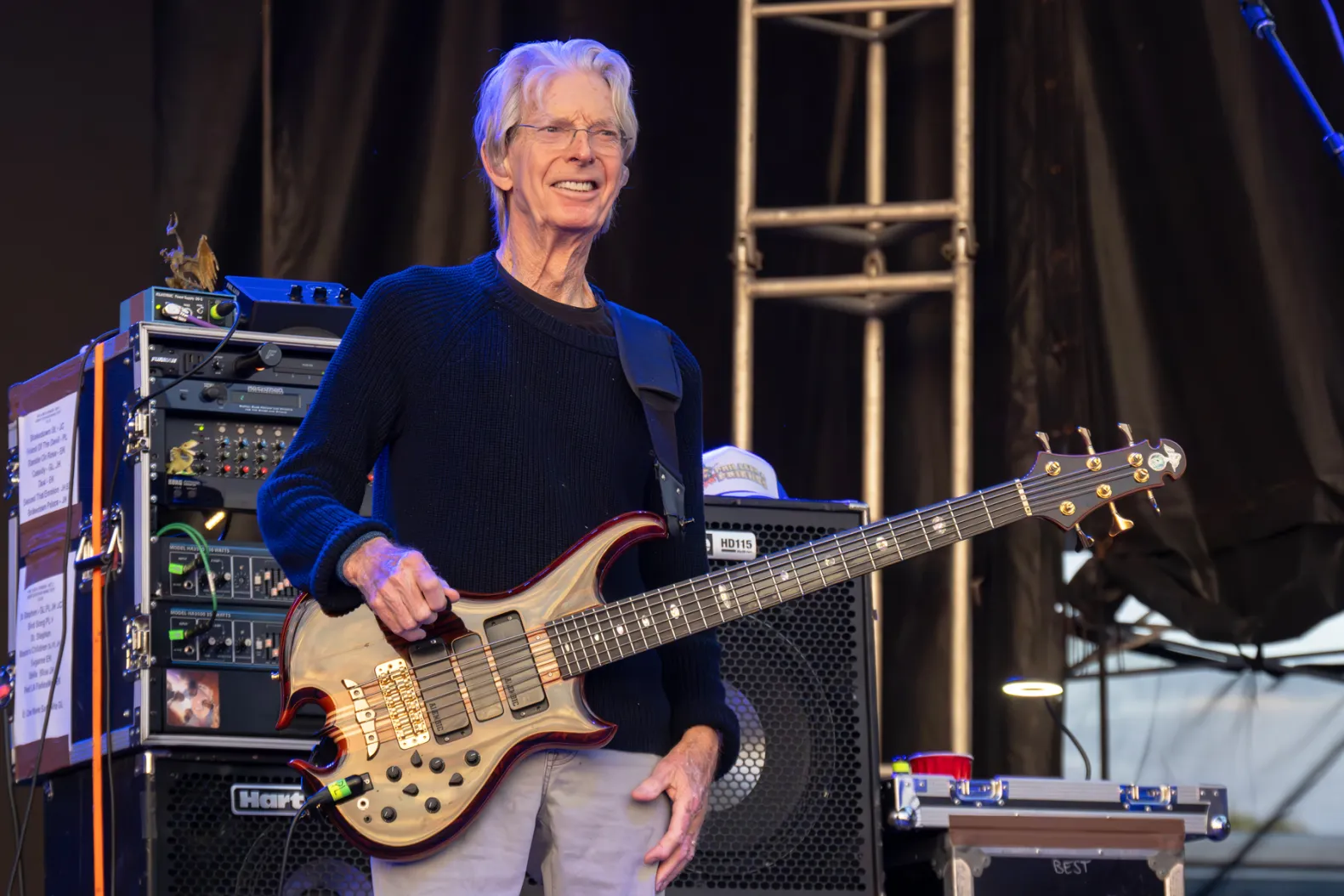
The news was announced on Lesh’s verified Instagram on Friday, which said he died “peacefully” on Friday morning.
“He was surrounded by his family and full of love. Phil brought immense joy to everyone around him and leaves behind a legacy of music and love,” the announcement on social media read. “We request that you respect the Lesh family’s privacy at this time.”
While no cause of death was given, Lesh’s health had seen challenges over the years. Having survived prostate cancer, bladder cancer, and a liver transplant in 1998 due to hepatitis C complications and years of heavy drinking, his resilience was admired by fans worldwide.
Phil was the oldest rockstar still actively performing, and his passion and dedication to live music were truly unmatched.
Early Days
Born in Berkeley, California, in 1940, Lesh’s musical journey was a remarkable one. Initially a trumpet player, he studied under Luciano Berio at Mills College and brought a strong classical influence to his early work. His approach changed forever after meeting Jerry Garcia and joining the Grateful Dead in 1965, where his improvisational skill and compositional instincts transformed the role of bass in rock music.
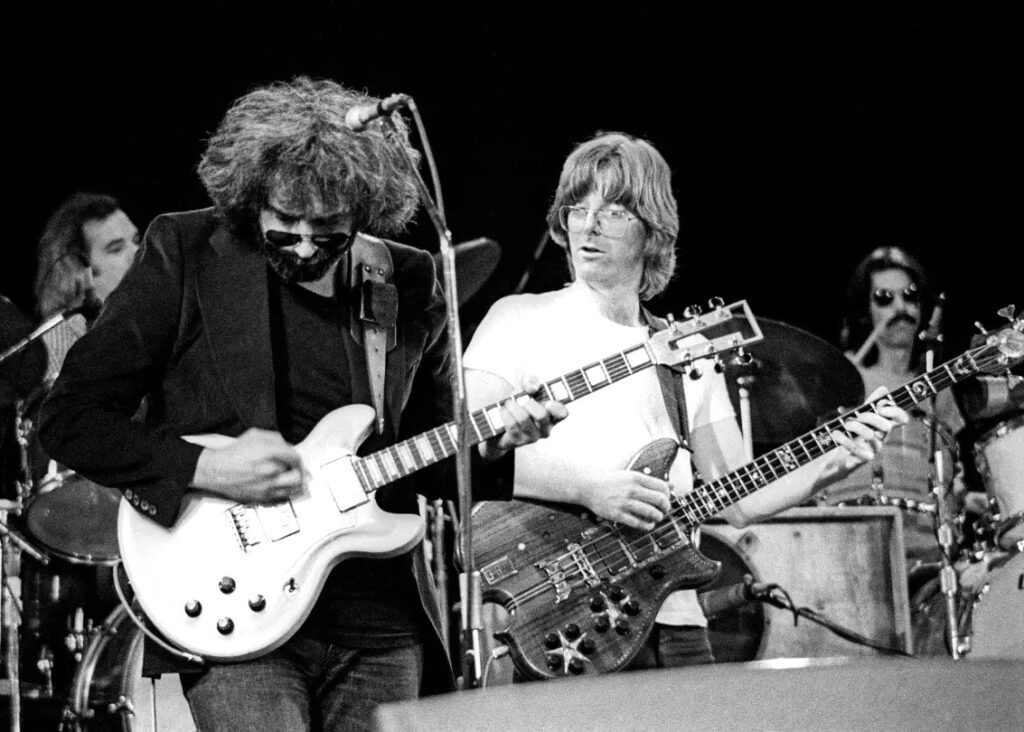
In the Dead’s early days, Lesh’s lack of formal bass training worked in his favor, freeing him to redefine the instrument’s role in rock music. Where traditional bass players provided rhythmic and harmonic support, Lesh’s bass lines became their own melodic threads, interwoven with Garcia’s guitar and Weir’s rhythm playing to create a three-dimensional sound unique to the Dead.
Lesh’s contributions were instrumental in defining the Grateful Dead’s sound, with bass lines that didn’t merely support but actively interacted with the guitars, making the Dead’s live performances uniquely dynamic.
In live performances, he was known for his improvisational brilliance, especially on tracks like “Dark Star” and “Unbroken Chain” highlighted his unusual phrasing, rhythm, and use of melody. As Rolling Stone put it in its tribute following his death, Lesh’s classical training under composer Luciano Berio shaped a style that treated songs as open forms rather than fixed arrangements — closer to a musical conversation between instruments than a traditional rhythm section.
His work on American Beauty and Workingman’s Dead reflected his ability to balance structure with spontaneity, making even studio tracks feel alive.
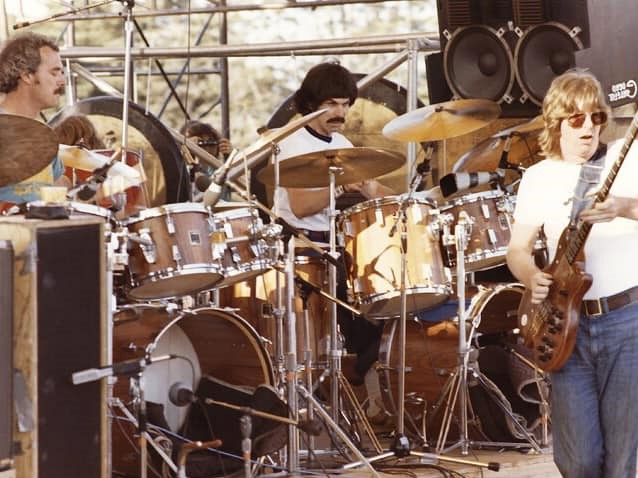
Post-Dead Years
After the Grateful Dead’s disbandment following Garcia’s death in 1995, Lesh was left with the same drive to create that had shaped his career, leading him to explore new musical landscapes with Phil Lesh and Friends.
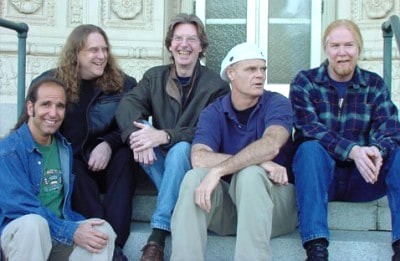
Formed in 1999, the band allowed Lesh to reinterpret the Dead’s catalog while also collaborating with a rotating cast of musicians from diverse genres.
Notable collaborators included Warren Haynes, Derek Trucks, John Scofield, and Trey Anastasio, all of whom brought fresh energy and interpretation to the Dead’s beloved songs. With Phil Lesh and Friends, he didn’t just revisit old hits but reinvented them for new audiences, ensuring that the Grateful Dead’s music evolved in the process. “I wanted these songs to be alive,” he once said, “not just replays of the past.”
In 2009, Lesh took his exploration even further by forming the band Furthur, alongside Grateful Dead guitarist Bob Weir. The group quickly garnered acclaim for its live performances, which were infused with the same spirit of improvisation that characterized the Grateful Dead.
Furthur allowed Lesh to reconnect with the Dead’s legacy while pushing musical boundaries with a new generation of fans. The band toured extensively, playing a mix of classic Dead songs and original compositions, while also fostering a collaborative environment that invited guest musicians to join them onstage.
Lesh often emphasized that Furthur was about keeping the spirit of the Grateful Dead alive, bridging the past and present through a shared love of music.
Furthur’s ability to deliver fresh interpretations of beloved tracks, coupled with their dedication to spontaneous jamming, resonated deeply with fans and solidified Lesh’s place as a guiding force in the continuing evolution of the Dead’s music.
Lesh’s work extended beyond the stage and studio when he co-founded Terrapin Crossroads, a music venue in San Rafael, California, in 2012. Part music hall, part restaurant, and part community hub, Terrapin Crossroads quickly became a gathering place for Deadheads and musicians alike.
Lesh would often take the stage to perform with his sons, Grahame and Brian, or host “Phil-O-Ween” Halloween shows, further extending his love of live performance and his dedication to fostering community.
The venue wasn’t just a tribute to his musical past; it was a living, breathing experiment in collaboration and creativity. “Music is a conversation,” Lesh often said, a philosophy he lived out both in his performances and at Terrapin.
Why His Bass Playing Still Matters
Lesh’s influence didn’t stay confined to the Grateful Dead’s own family tree. Phish bassist Mike Gordon has been open about how directly Lesh shaped his own playing — the two became friends starting in 1999, and in 1995 Lesh’s own bass tech walked Gordon through the rig and technique behind Lesh’s tone, including his use of a pick, something Gordon adopted in his own playing afterward. “There’s never been more beautiful bass playing,” Gordon told Rolling Stone after Lesh’s death, describing him as an artist who could ease into a groove “softly and gently” rather than anchoring a song by force. That’s a specific, technical kind of praise from one of the few other bassists working in the same idiom — a jam-band lineage that Lesh’s melodic, conversational approach essentially made possible.
Terrapin Crossroads itself traced back to a specific inspiration: a visit Lesh made to Levon Helm’s barn in Woodstock, New York, where The Band’s former drummer hosted intimate “Midnight Ramble” concerts. Lesh wanted to build something similar in Marin County. The venue opened in March 2012 in a former restaurant on the San Rafael Canal and, over its nine years of operation, became a genuine hub for the Bay Area’s jam-band and Deadhead community — not just a vanity project, but a room where younger musicians regularly shared a stage with Lesh himself. It closed in November 2021.
In his later years, Lesh remained active and involved with the music he loved, staying true to his artistic ideals — performing regularly with his sons, Grahame and Brian, at Terrapin Crossroads until shortly before his death.
Rest in Peace Phil and thank you for the music, the memories, and for redefining what bass could be.  May you rest in peace
Sources & Further Reading
- CNN — “Phil Lesh, founding member and bassist for the Grateful Dead, has died at 84”
- Wikipedia — Phil Lesh (biographical cross-reference)
Related Deadikace coverage: Going Down the Road Feeling Bad: Grateful Dead Guitar Jam
Latest Posts
 Metallica Launch Las Vegas Sphere Residency With Rare Song Debuts
 Bruce Springsteen Denounces ‘Lawless Government’ in Power to the People Speech
 Jack Black’s Black Sabbath Tribute Band Joined by Geezer Butler for ‘War Pigs’
 Brian May Confirms Queen Will Never Tour Again: ’50 Years Is Enough’
 Noel Gallagher Epiphone Guitar Fetches £12,000 at Oasis Auction
 Are AC/DC About to Play Their Final Show?