
May 17, 1987: The Day Tom Petty’s House Burned Down
Targeted by Flames: The Devastating Arson Attack on Tom Petty’s Home
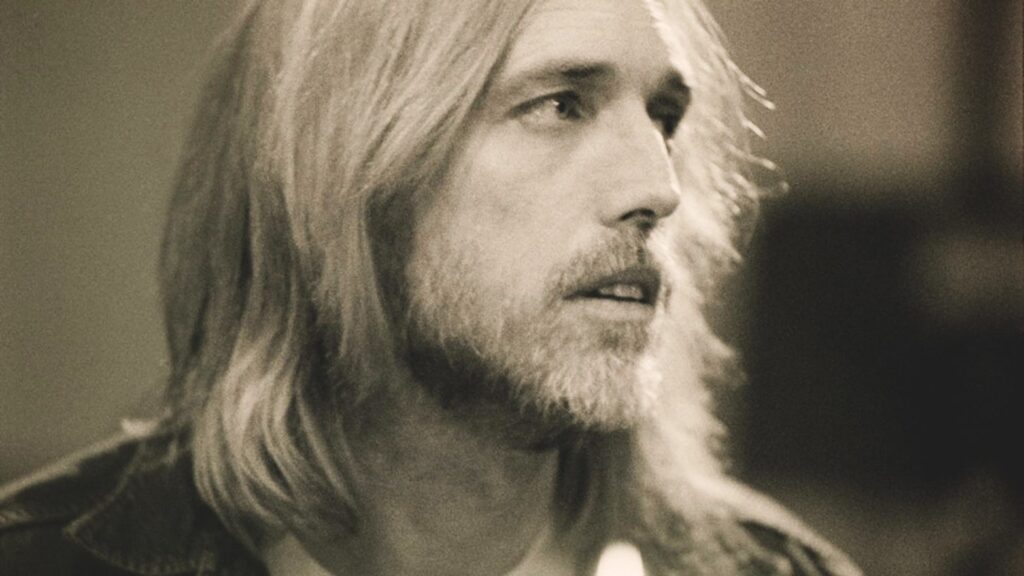
On May 17, 1987, an arsonist set fire to Tom Petty’s home in Encino, California, while Petty, his then-wife Jane Benyon, and their young daughter were inside. Someone had cut a hole in the property’s back fence, doused a wooden staircase with lighter fluid, and ignited it before fleeing. The family escaped; their housekeeper was injured trying to fight the flames. Damage exceeded $1 million. Petty’s basement recording studio survived intact. The case was never solved.
Petty and his family had lived in the Encino house for years without incident before the fire — there had been no threats, no warning signs, nothing to suggest anyone had the house under watch.
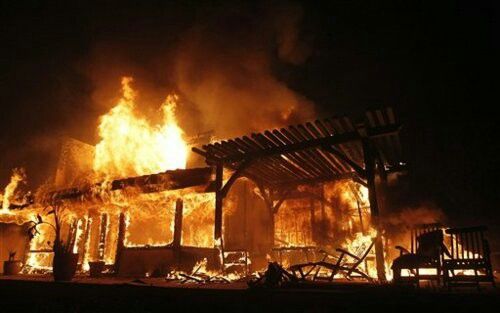
Fortunately, the family managed to escape, albeit not without injuries to their housekeeper. The fire, fueled by the property’s wooden roof, quickly spread, resulting in over $1 million in damages. Despite the devastating loss, Petty’s basement recording studio miraculously remained unscathed.
Reflecting on the incident, Petty admitted to feeling blindsided, as there had been no prior indications of danger such as threatening messages or calls. Yet, perhaps most baffling of all, the perpetrator was never apprehended, leaving the crime unsolved even after 35 years.
“We were shaken for years by it,” Petty told biographer Paul Zollo, in an account published in Zollo’s 2005 book Conversations With Tom Petty. In the aftermath, Petty and his family sought refuge with relatives and friends while they rebuilt their lives on the same site. However, the ordeal left a lasting impact on Petty, influencing his approach to songwriting in a profound way.
“I wouldn’t even use the word ‘fire’ in a song or anything,” Petty confessed to Zollo. “It really frightened me. They didn’t just try to kill me, they tried to wipe out my whole family. And it was a hell of a day. It was my wife’s birthday.”
How the Fire Became a Song
“I Won’t Back Down” wasn’t written in the immediate aftermath of the fire — it arrived two years later, in 1989, as the lead single from Full Moon Fever, Petty’s first album released outside of the Heartbreakers. He co-wrote it with Jeff Lynne, the ELO frontman who produced the album as part of the Traveling Wilburys circle Petty had fallen in with alongside George Harrison, Roy Orbison, and Bob Dylan. Harrison played on the track and sang backing vocals; a session drummer, Phil Jones, played on the album version, though the song’s music video — shot with Harrison and Lynne on guitar — features Ringo Starr behind the kit.
The defiance in the lyric reads differently once you know what it followed. By the time Petty wrote it, he’d already spent years absorbing hits from multiple directions — a public dispute with his own label, MCA, over how his records were priced, and a lawsuit he won against a tire company that had lifted one of his songs for a commercial without permission. The arson was the most violent of those confrontations, and unlike the others, it targeted his family directly rather than his music. “I Won’t Back Down” doesn’t name the fire, but Petty’s own account of writing it — someone who “tried to kill me” and “tried to wipe out my whole family” — makes the connection explicit. The song became one of his most enduring, later covered by artists including Johnny Cash.
Sources & Further Reading
- American Songwriter — The Meaning Behind the Song: “I Won’t Back Down” by Tom Petty
- Paul Zollo, Conversations With Tom Petty (Omnibus Press, 2005)
- American Songwriter — “The Near Tragedy Tom Petty and His Family Escaped That Inspired One of His Greatest Hits”
Latest Posts
 Metallica Launch Las Vegas Sphere Residency With Rare Song Debuts
 Bruce Springsteen Denounces ‘Lawless Government’ in Power to the People Speech
 Jack Black’s Black Sabbath Tribute Band Joined by Geezer Butler for ‘War Pigs’
 Brian May Confirms Queen Will Never Tour Again: ’50 Years Is Enough’
 Noel Gallagher Epiphone Guitar Fetches £12,000 at Oasis Auction
 Are AC/DC About to Play Their Final Show?