
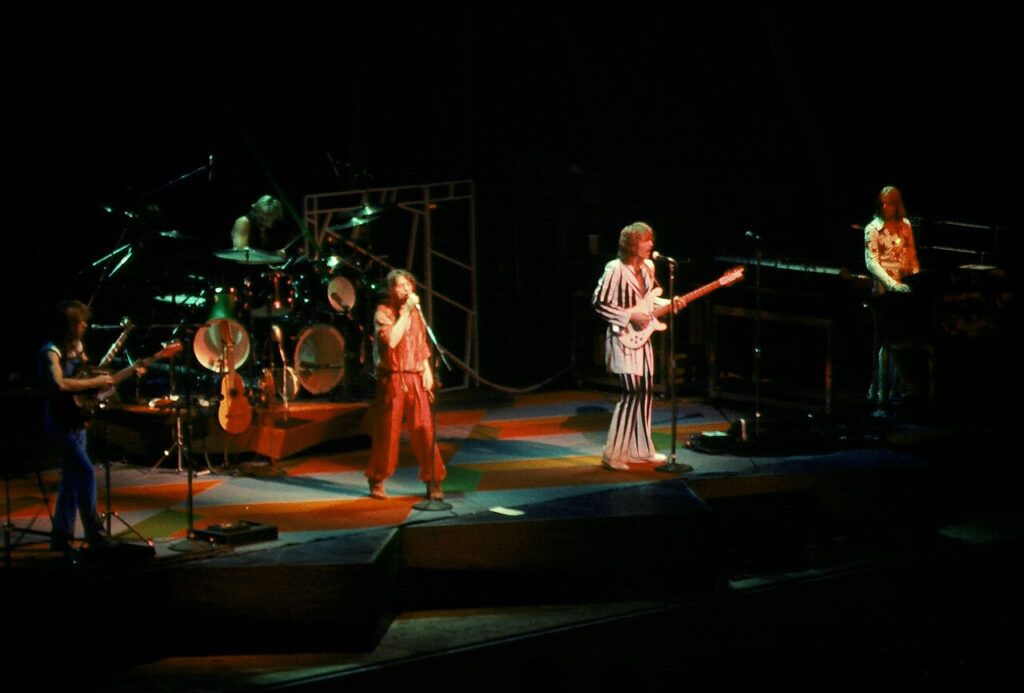
BAND PROFILE est. 1968
Yes
United Kingdom
Progressive rockart rocksymphonic rockpop rock
Not rated0 Fans
Yes are an English progressive rock band formed in London in 1968. Having featured 20 full-time musicians across their history, their most notable members include lead singer Jon Anderson, bassist Chris Squire, guitarists Steve Howe and Trevor Rabin, drummers Bill Bruford and Alan White, and keyboardists Tony Kaye and Rick Wakeman, who represented Yes when they were inducted into the Rock and Roll Hall of Fame in 2017. Widely regarded as progressive rock pioneers, the group have explored several musical styles and remain one of the most successful, influential, and longest-lasting acts in the genre. Their discography spans 25 studio albums, with 13.5 million Recording Industry Association of America (RIAA)-certified albums sold in the United States and more than 30 million worldwide.Founded by Anderson, Squire, Bruford, Kaye, and guitarist Peter Banks, Yes began performing a mix of original songs and covers spanning rock, pop, blues, and jazz, as showcased on their first two albums, Yes (1969) and Time and a Word (1970). A change of direction in 1970 following the replacement of Banks with Howe led to a series of celebrated progressive rock albums, including four consecutive US platinum or multi-platinum sellers: The Yes Album (1971); Fragile (1971), which included the hit single "Roundabout"; Close to the Edge (1972); and the live album Yessongs (1973). Subsequent releases, including Tales from Topographic Oceans (1973), Going for the One (1977), and Tormato (1978), also achieved major commercial success. Yes earned a reputation for their elaborate stage sets, light displays, and iconic album covers designed by Roger Dean. Personnel shifted frequently during this era; following the 1980 departures of Anderson and Wakeman, Yes recruited keyboardist Geoff Downes and singer Trevor Horn of the Buggles for the album Drama (1980) before the group dissolved the following year.In 1983, Squire, White, Anderson, Kaye, and Rabin reformed Yes. Rabin's songwriting moved the group toward a mainstream pop-rock sound, resulting in their highest-selling album, 90125 (1983). This release featured the group's only US number-one single, "Owner of a Lonely Heart", and won a Grammy Award for Best Rock Instrumental Performance for the track "Cinema". The follow-up album, Big Generator (1987), was also successful. In 1989, the offshoot group Anderson Bruford Wakeman Howe formed and released a self-titled album. At the suggestion of their record company, both factions merged into a short-lived eight-piece line-up for Union (1991) and its corresponding tour. Yes continued to tour regularly and release albums—including the symphonically backed Magnification (2001)—before entering a temporary hiatus in 2004.Following the cancellation of a 2008 tour due to Anderson's health, Yes enlisted Benoît David as their new lead singer and resumed activity. Jon Davison replaced David in 2012. Squire died in 2015, leaving the band with no remaining original members. Three former members toured separately as Yes Featuring Jon Anderson, Trevor Rabin, Rick Wakeman from 2016 to 2018. White, the longest-tenured member at the time, died in 2022. Since February 2023, the band's line-up has consisted of Howe, Downes, Davison, bassist Billy Sherwood, and drummer Jay Schellen. Their latest studio album, Aurora, was released in June 2026.In late 1967, bassist Chris Squire and guitarist Peter Banks, both formerly of the Syn, joined the psychedelic rock band Mabel Greer's Toyshop, which had been formed in 1966 by Clive Bayley and Robert Hagger. They played at the Marquee Club in Soho, London where Jack Barrie, owner of the nearby La Chasse club, saw them perform. He later recalled: "the musicianship was very good but it was obvious they weren't going anywhere". Barrie introduced Squire to singer Jon Anderson, a worker at the bar in La Chasse, who found they shared interests in Simon & Garfunkel and harmony singing. That evening they wrote "Sweetness", which was included on the first Yes album, and Anderson joined as lead vocalist. During this time, the band rehearsed in the basement of The Lucky Horseshoe cafe on Shaftesbury Avenue between 10 June and 9 July 1968. In June 1968, Hagger was replaced by Bill Bruford, who had placed an advertisement in Melody Maker, while in July the classically trained organist and pianist Tony Kaye, of Johnny Taylor's Star Combo and the Federals, became the keyboardist. Meanwhile, Banks had left Mabel Greer's Toyshop to join Neat Change, but he was dismissed by this group on 14 July 1968 and was recalled by Squire, replacing Bayley as guitarist.
Biography summary from English Wikipedia, photograph via Wikimedia Commons.
1968–1970Formation, first album and Time and a WordCAREER
1970–1974The Yes Album, Fragile, Close to the Edge and Tales from Topographic OceansCAREER
1974–1980Relayer, Going for the One, Tormato and the Paris sessionsCAREER
1980–1981Drama and splitCAREER
1982–1988First reformation, 90125 and Big GeneratorCAREER
1988–1995Anderson Bruford Wakeman Howe, Union and TalkCAREER
1995–2000Keys to Ascension, Open Your Eyes and The LadderCAREER
2001–2008Magnification, Anniversary touring, and Anderson's departureCAREER
2009–2015Second reformation, Fly from Here, Heaven & Earth, and Squire's deathCAREER
2016–202350th Anniversary, Hall of Fame induction, The Quest, and White's deathCAREER
2023–presentMirror to the Sky, Aurora and further touringCAREER
—
Jon Anderson
CURRENT MEMBER
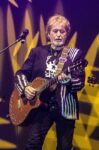
—
Steve Howe
CURRENT MEMBER
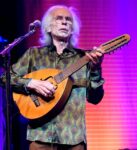
—
Rick Wakeman
CURRENT MEMBER
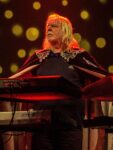
—
Bill Bruford
CURRENT MEMBER
—
Chris Squire
CURRENT MEMBER
—
Peter Banks
CURRENT MEMBER
1969
Yes
ALBUM

1970
Time and a Word
ALBUM
1971
The Yes Album
ALBUM
1971
Fragile
ALBUM
1972
Close to the Edge
ALBUM
1973
Yessongs
LIVE
1973
Tales From Topographic Oceans
ALBUM
1974
Relayer
ALBUM
1975
Yesterdays
COMPILATION
1977
Going for the One
ALBUM
1978
Tormato
ALBUM
1979
Yesshows
LIVE
1980
Drama
ALBUM
1981
Classic Yes
COMPILATION
1983
90125
ALBUM
1985
9012Live: The Solos
LIVE
1987
Big Generator
ALBUM
1991
YesStory
COMPILATION
1991
YesYears
COMPILATION
1991
Union
ALBUM
1993
Highlights: The Very Best of Yes
COMPILATION
1994
Talk
ALBUM
1996
Keys to Ascension
LIVE
1997
Open Your Eyes
ALBUM
1997
Keys to Ascension 2
LIVE
1997
Something’s Coming: The BBC Recordings 1969–1970
LIVE
1998
Yes, Friends and Relatives
COMPILATION
1998
Keys to Ascension, Volumes 1 & 2
COMPILATION
1999
The Ladder
ALBUM
1999
Millenium Collection
COMPILATION
1999
Astral Traveller
COMPILATION
2000
House of Yes: Live From House of Blues
LIVE
2000
The Best of Yes: 1970–1987
COMPILATION
2000
Union Live
LIVE
2000
Geographic Potions
COMPILATION
2001
Yes, Friends and Relatives, Volume 2
COMPILATION
2001
Live 1975 at Q.P.R., Vol. 1
LIVE
2001
Popular Selections From “Magnification” and “House of Yes: Live From House of Blues”
COMPILATION
2001
Keystudio
COMPILATION
2001
Magnification
ALBUM
2001
Live 1975 at Q.P.R., Vol. 2
LIVE
2002
Essential Elements
COMPILATION
2002
Sweet Dreams
COMPILATION
2002
In a Word: Yes (1969– )
COMPILATION
2002
Extended Versions: The Encore Collection
LIVE
2002
Symphonic Live
LIVE
2002
Yes‐Today
COMPILATION
2002
Greatest Video Hits
COMPILATION
2003
Roundabout: The Best of Yes Live
LIVE
2003
The Yes Story: Gold
COMPILATION
2003
The Ultimate Yes: 35th Anniversary Collection
COMPILATION
2004
Owner of a Lonely Heart
COMPILATION
2004
Topography: The Yes Anthology
COMPILATION
2004
Yes Acoustic: Guaranteed No Hiss
LIVE
2005
The Word Is Live
COMPILATION
2005
The Solid Gold Collection
COMPILATION
2005
The Collection
COMPILATION
2006
Essentially
COMPILATION
2006
Yesstories
COMPILATION
2006
Live and Solo
COMPILATION
2006
Rhino Hi-Five: Yes
COMPILATION
2007
The Definitive Rock Collection
COMPILATION
2007
Live at Montreux 2003
LIVE
2007
Roundabout & Other Hits
COMPILATION
2007
Yes and Friends
COMPILATION
2008
Collection
COMPILATION
2008
Yes + Friends
COMPILATION
2009
Introducing: Yes
COMPILATION
2009
In the Present: Live From London
LIVE
2009
The Lost Broadcasts
LIVE
2009
Rock Heroes
COMPILATION
2011
Astral Traveller: The BBC Sessions
LIVE
2011
In the Present: Live From Lyon
LIVE
2011
Fly From Here
ALBUM
2011
Wonderous Stories: The Best of Yes
COMPILATION
2013
Original Album Series
COMPILATION
2013
High Vibration
COMPILATION
2013
Yessongs
LIVE
2013
The Studio Albums: 1969–1987
COMPILATION
2014
Heaven & Earth
ALBUM
2014
The Very Best of Yes
COMPILATION
2014
Like It Is: Yes at the Bristol Hippodrome
LIVE
2014
Songs From Tsongas: 35th Anniversary Concert
LIVE
2014
The Greatest Hits
COMPILATION
2015
Live at Duke University, Durham, North Carolina, November 11, 1972
LIVE
2015
The Early Years
COMPILATION
2015
Progeny: Highlights From Seventy‐Two
LIVE
2015
Like It Is: Yes at the Mesa Arts Center
LIVE
2015
Progeny: Seven Shows From Seventy‐Two
COMPILATION
2017
Topographic Drama: Live Across America
LIVE
2018
Fly From Here: Return Trip
ALBUM
2018
The Steven Wilson Remixes
COMPILATION
2019
Yes 50 Live
LIVE
2019
Live at Glastonbury Festival 2003
LIVE
2021
The Quest
ALBUM
2021
Union 30 Live
COMPILATION
2023
Mirror to the Sky
ALBUM
2023
Union 30 Live Bonus Tracks & Tour Extras
COMPILATION
2023
Yessingles
COMPILATION
2026
Aurora
ALBUM
Discography via MusicBrainz.
Reviews
Average rating0Based on 0 ratings
5 ★0
4 ★0
3 ★0
2 ★0
1 ★0
Log in or sign up to rate and review.
Log In / Sign UpNo reviews yet for this band.